
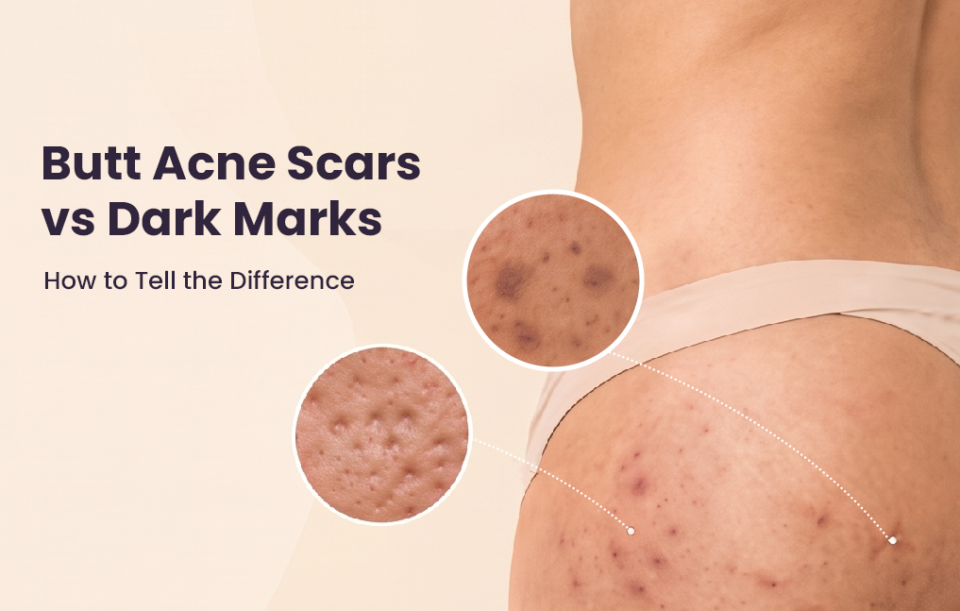

Butt Acne Scars vs Dark Marks: How to Tell the Difference
Breakouts on the buttocks are common, and most people deal with them quietly. The frustrating part is usually not the spots themselves. It is what they leave behind. Months after the bumps have cleared, the dark patches are still there, and it is hard to know whether they will fade or whether something needs to be done about them.
There is a real difference between a mark and a scar, and it decides what works. This article explains how to tell them apart.
Most Butt Acne Is Not Actually Acne
Pimples on the butt look like facial acne, but they usually are not the same condition. In most cases they are folliculitis, which is inflammation of the hair follicle, often triggered by bacteria or yeast that normally live on the skin.
The distinction matters because it changes the treatment. Products made for facial acne target oil glands and blocked pores. Folliculitis on the butt responds to something different, which is why many people find their usual acne treatment does very little here.
What Causes Bumps on the Buttocks
The skin in this area faces a specific set of stresses that facial skin does not.
- Sweat trapped against the skin, especially in a humid city like Mumbai
- Friction from sitting for long hours or from tight clothing
- Fabrics that do not breathe and hold moisture against the skin
- Staying in gym wear or damp clothing after a workout
- Shaving or waxing the area, which irritates the follicle opening
Butt acne causes are mostly mechanical rather than hormonal, which is good news. Small changes in clothing and hygiene habits often reduce how often it happens.
Bumps That Are Not Acne At All
Not every bump in this area is a breakout, and some need medical attention rather than skincare.
A single large painful lump that keeps growing may be a boil or a cyst. Recurring painful nodules in the same spots, particularly where skin folds meet, can point to a condition called hidradenitis suppurativa, which needs proper medical care rather than home treatment. Small rough bumps spread evenly across the skin are often keratosis pilaris, which is a different condition entirely.
If a bump is very painful, keeps returning in the same place, or is growing, see a doctor rather than treating it yourself.
Dark Marks or Scars? How to Tell
Once the breakout settles, look at what is left behind and, more usefully, feel it.
A mark is flat. Only the colour has changed. The skin surface is smooth when you run a finger over it.
A scar has texture. The surface is raised, or it is dipped inwards. The collagen structure changed while the skin was healing.
| Dark marks | Scars | |
| How it feels | Flat and smooth | Raised or dented |
| What caused it | Extra pigment after inflammation | Collagen damage or overgrowth |
| Fades on its own | Usually, over months | No |
| Responds to creams | Sometimes, slowly | No |
| Needs a procedure | Rarely | Usually |
Flat Dark Marks After Butt Acne
Dark bumps on the buttocks that have flattened out but stayed brown are post inflammatory hyperpigmentation. The inflammation triggered extra melanin, and the pigment remains after the bump has gone.
There is one useful difference between this area and the face. Facial pigmentation is driven largely by sun exposure, so sunscreen does most of the work there. The buttocks are covered, so sun is rarely the problem. Here the aggravating factor is friction. Repeated rubbing from tight clothing or long hours of sitting keeps low grade inflammation going and slows the fading.
Most flat marks settle over several months. Where they are widespread or have stopped improving, clinical pigmentation treatment options can be considered after an examination.
When It Is Actually a Scar
Butt scars fall into two broad groups, and they are managed differently.
Raised scars sit above the skin surface. These form when the body produces too much collagen during healing, and they are more likely after a deep or repeatedly squeezed lesion.
Depressed scars are small dips or pits where tissue was lost. These are less common on the buttocks than on the face, but they do occur after deeper infections.
Depressed scarring is approached by stimulating new collagen or releasing tethered tissue underneath, using methods similar to those used in acne scar treatment on the face, usually across more than one session.
Raised and keloid scars follow a different path, and the wrong approach can make a raised scar larger rather than flatter. This is why the scar type is assessed before anything is planned.
Why Marks Last Longer on Indian Skin
Most Indian skin falls into Fitzpatrick types four and five, where pigment producing cells react more strongly to inflammation. The same breakout that leaves a faint pink patch on lighter skin can leave a clearly visible brown mark here, and hold it for longer.
This also affects treatment choice. Stronger peels and lasers carry a higher risk of triggering fresh pigmentation in deeper skin tones. A plan that suits lighter skin can worsen the problem here, which is why skin tone is part of the assessment rather than an afterthought.
Treat the Breakouts First
There is little point working on marks while new bumps keep appearing. Each new breakout creates a fresh mark, so the sequence matters.
Butt acne treatment usually starts with simple measures. Change out of damp or gym clothing promptly. Choose looser, breathable fabrics. Avoid scrubbing, which prolongs inflammation rather than clearing it. Do not squeeze the bumps, because squeezing is the main reason a temporary mark becomes a permanent scar.
If breakouts are persistent, painful or keep returning, the underlying folliculitis needs medical management from a doctor. Once it is under control, the marks and scars left behind can be addressed properly.
How to Prevent Marks and Scars
- Do not squeeze or pick, however tempting it is
- Shower and change soon after sweating
- Wear breathable cotton rather than synthetic fabrics against the skin
- Take breaks from prolonged sitting where possible
- Treat painful or recurring bumps early instead of waiting them out
Frequently Asked Questions
Do butt acne scars go away on their own?
Flat dark marks usually fade over several months. Raised or dented scars do not, because the texture of the skin has changed.
How long do dark marks on the buttocks take to fade?
Several months is common, and on deeper skin tones it can take a year or more. Reducing friction to the area helps the process along.
Can creams remove butt acne scars?
Creams may help flat pigmentation fade a little faster. They do not change skin texture, so they do nothing for raised or pitted scars.
Why do I keep getting pimples on my bum?
Recurring bumps are usually folliculitis kept going by sweat, friction and clothing that does not breathe. If they are painful or keep returning in the same spot, see a doctor.
When should I see a specialist about the marks?
If the marks have stopped improving after several months, or if the skin surface feels raised or dented rather than flat.
Talk to a Specialist
Marks and scars left by butt acne are two different problems, and they need different treatment. An in person assessment will tell you which one you are dealing with and whether a procedure is worth considering.
Navaa Plastic & Cosmetic Surgery is located in Andheri West, Mumbai, where scar type and skin tone are assessed together before any approach is recommended.


