
- Home
- About Us
- Treatments
-
-
- Skin
-
- Face
-
- Breast
- Reconstructive
-
- Body
- Genitalia
- Maxillofacial
-
-
- Doctors
- Blogs
- Gallery
- Contact Us
- Home
- About Us
- Treatments
-
-
- Skin
-
- Face
-
- Breast
- Reconstructive
-
- Body
- Genitalia
- Maxillofacial
-
-
- Doctors
- Blogs
- Gallery
- Contact Us
Axillary Breast Tissue Removal in Mumbai Armpit Fat & Gland Removal at Navaa Plastic & Cosmetic Surgery

Many women notice a soft bulge or fullness near the armpit that does not flatten with exercise, weight loss, or posture correction. It may swell and become tender around periods or during pregnancy. It affects how bras fit, how sleeveless clothing looks, and in some cases, how freely the arm moves. This is axillary breast tissue — also called accessory breast tissue — and it is a genuinely common condition that many women in India live with for years before realising it can be safely and permanently removed.
At Navaa Plastic & Cosmetic Surgery, axillary breast tissue removal is performed by MCh-qualified plastic surgeons using liposuction, surgical excision, or a combination of both — chosen based on what is actually present in the armpit. The procedure is a day-care surgery with a short recovery, and the results are permanent.
— Why Choose Us
Why Choose Navaa Plastic and Cosmetic Surgery Clinic for Axillary Breast Tissue Removal in Mumbai?
At Navaa Plastic and Cosmetic Surgery Clinic, we combine surgical precision with aesthetic artistry to achieve refined and natural outcomes.
Plastic Surgeon-Led, Not a General Clinic
Axillary breast tissue removal demands expert knowledge of the delicate structures within the armpit. At Navaa, every procedure is performed by an MCh-qualified plastic surgeon using techniques that prioritise both safety and cosmetic results.
Hidden Incision Technique for Minimal Scarring
Incisions are carefully placed within the natural crease of the armpit to keep scars as discreet as possible. As healing progresses, the scar usually blends into the skin fold and remains hidden in everyday clothing.
Fatty and Glandular Tissue Both Treated
Every patient is different. We assess whether the tissue is fatty, glandular, or a combination of both, and choose the most appropriate surgical technique to achieve a natural-looking result.
Personalised Treatment Planning
Your treatment plan is tailored to your anatomy, concerns, and goals. When appropriate, axillary breast tissue removal can be safely combined with other breast procedures in a single surgery.
Located in Andheri, Mumbai
From consultation to recovery, our team provides expert care in a modern, fully equipped surgical facility. We guide you through every step to ensure a smooth and comfortable experience.
Our Results – Before and After
During your consultation, you can review real before-and-after results from patients with different concerns, helping you understand what is achievable and what to expect from treatment.
— Our Doctors
Meet Our Expert Team
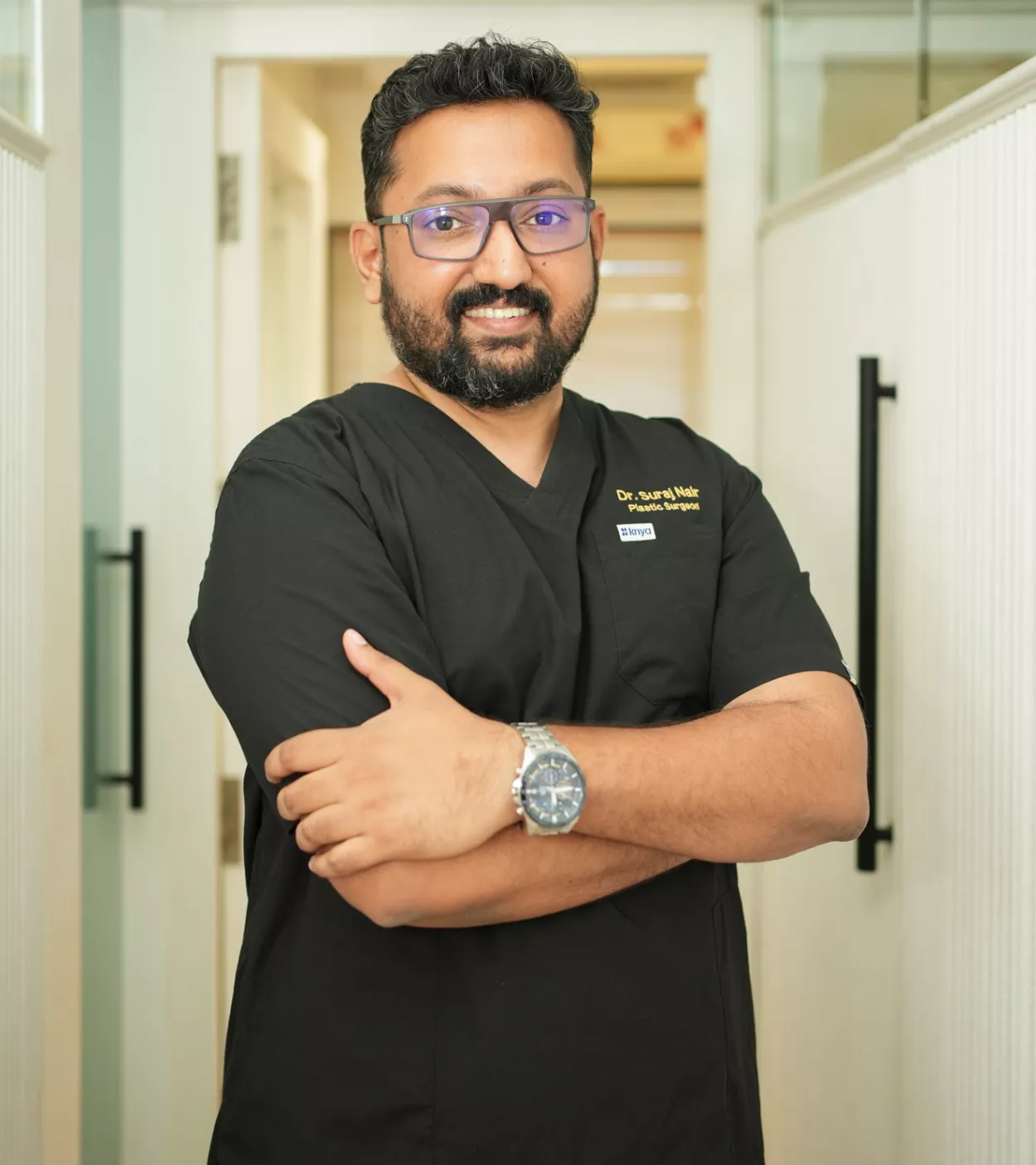
Dr. Suraj Nair
Trained at PGIMER, Chandigarh, Dr. Nair is a highly experienced breast cosmetic surgeon known for performing numerous breast augmentations, reductions, and lifts with natural outcomes.

Dr. Sanket Shetty
M.Ch Plastic Surgeon with international training at Royal Stoke Hospital, UK, experienced in advanced aesthetic and reconstructive surgeries.

Dr. Lukesh Rathod
With over 10 years of experience, Dr. Rathod specializes in minimally invasive aesthetic procedures and advanced skin treatments
Types of Axillary Breast Tissue Removal at Navaa
The technique used for axillary breast tissue removal depends on what is actually present in the armpit its composition (fatty vs glandular), volume, and how it affects the surrounding area. Your surgeon will assess this at consultation and recommend the most appropriate approach.
Liposuction for Axillary Breast Tissue
Liposuction is appropriate when the axillary tissue is predominantly fatty in nature. Using a fine cannula inserted through a tiny incision in the armpit crease, the surgeon suctions out the excess fatty tissue to create a flatter, smoother underarm contour. Liposuction alone leaves the smallest possible scar typically just a few millimetres, hidden within the natural fold of the armpit. However, if glandular tissue is present, liposuction alone will not fully resolve the condition excision is also needed. The technique used is the same as Liposuction in Mumbai for other body areas, applied with the specific precision required for the armpit.
Surgical Excision of Glandular Tissue
Surgical excision is indicated when the axillary tissue contains significant glandular component, when the volume is large, or when the tissue is firm and cannot be addressed with liposuction alone. The surgeon makes a carefully planned incision in the natural crease of the armpit and directly removes the glandular tissue. Excision allows complete, thorough removal and is the only method that can address glandular axillary breast tissue reliably. The incision is placed in the axillary fold so that the resulting scar sits within a natural skin crease, making it well-concealed in everyday life. The removed tissue is sent for histopathology as standard practice.
Combined Liposuction and Excision
For many patients particularly those with a mixed presentation of both fat and glandular tissue, or those with a larger volume of axillary tissue a combination of liposuction and excision produces the most complete and natural-looking result. Liposuction is used first to reduce the fatty component and debulk the area, followed by excision of the remaining glandular tissue. The combination allows thorough removal with the smallest possible incision and the best possible contouring of the surrounding armpit area.
Minimal Scar Revision (When Required)
In some patients, excess skin or a previous scar may affect the final appearance of the underarm. Where needed, your surgeon can carefully revise the area during the same procedure to create a smoother contour and achieve a more refined cosmetic result.
Take the first step towards smooth underarm contours today — Book your consultation with a trusted axillary breast tissue removal surgeon in Mumbai.
Which Technique Is Right for You?
As a general guide:
- Soft, uniform, non-tender axillary pad: likely predominantly fatty liposuction is the starting point
- Firm, tender, hormonally active tissue: likely glandular excision is required
- Large volume, mixed consistency, or skin excess: combined liposuction and excision
- Uncertainty about composition: ultrasound imaging before surgery to characterise the tissue and plan accordingly
Your surgeon will explain the recommended approach, the expected scar placement, and the anticipated outcome at your consultation before any decision is made.
What Is Axillary Breast Tissue?
Axillary breast tissue also referred to as accessory breast tissue, supernumerary breast tissue, or armpit breast is the presence of breast-like tissue in the underarm area. It is a benign condition that occurs during embryonic development and is more common than most people realise. Studies estimate it affects between 2% and 6% of women, and it is seen across all body types and skin tones.
Medical Definition – Accessory Breast Tissue and the Axillary Tail
In medical terminology, accessory breast tissue is classified as a congenital anomaly of breast development. The axillary tail also called the tail of Spence is the natural extension of normal breast tissue that reaches into the armpit. In some women, this tail is more prominent than usual. In others, truly separate accessory breast tissue exists in the axilla independent of the main breast.
Accessory breast tissue may contain fat only, glandular tissue only, or a combination of both. When it contains glandular tissue, it behaves like normal breast tissue swelling with hormonal changes, becoming tender during menstruation, and in rare cases, producing milk during breastfeeding. This hormonal responsiveness is one of the clearest signs that what is present is true glandular tissue and not simply excess armpit fat.
Axillary Breast Tissue vs Armpit Fat – What's the Difference?
This is one of the most important distinctions to make before planning treatment, because it directly determines which surgical technique will be effective.
Armpit fat: Ordinary subcutaneous fat in the armpit area. Soft, uniform, and does not change with hormonal cycles. Can sometimes be reduced with significant overall weight loss, though spot reduction through exercise is not effective.
Axillary breast tissue: Contains glandular tissue the same type of tissue present in the breast. Does not respond to diet or exercise under any circumstances. Swells and becomes tender with hormonal changes. May produce secretions during breastfeeding. Requires surgical removal for permanent resolution.
Many patients searching for armpit fat removal discover at consultation that what they have is true axillary breast tissue not simply fat. The clinical assessment at Navaa distinguishes between the two, because the right treatment for each is different.
Why Does Axillary Breast Tissue Form – The Milk Line Explained
The explanation lies in how the breast develops in the embryo. During fetal development, a structure called the milk line forms a ridge of tissue running from the armpit down to the groin on both sides of the body. In most people, this ridge regresses completely during development, leaving only the normal breast tissue in the chest area.
In some individuals, portions of this milk line do not fully regress. The axilla the armpit is the most common location for residual milk line tissue to persist, which is why accessory breast tissue in the armpit is by far the most frequent form of this condition. This is a normal variation in development, not a defect or disease, and it carries no inherent health risk.
Signs and Symptoms of Axillary Breast Tissue
Axillary breast tissue presents differently in different women depending on whether it is predominantly fatty or glandular, and how hormonally active it is. Some women notice it only in certain clothing. Others experience it as a persistent physical discomfort.
How It Looks and Feels
The most common presentation is a soft, rounded fullness or bulge in the front part of the armpit visible when the arms are raised or when wearing fitted clothing, particularly sleeveless tops or bras. In Indian women, this is sometimes described as the bulge that appears at the side of the bra or near the underarm seam.
The texture varies by tissue type. Fatty axillary tissue feels soft and uniform, similar to fat elsewhere on the body. Glandular tissue feels firmer and may have a more irregular texture. In some cases, a distinct lump or nodule is palpable within the axillary region. The skin over the tissue is normal there is typically no redness, warmth, or skin change unless the area is irritated by friction.
When Symptoms Get Worse – Hormones, Pregnancy and Breastfeeding
One of the most clinically significant features of true glandular axillary breast tissue is that it responds to hormonal fluctuations just as normal breast tissue does:
During menstruation: The tissue swells, becomes tender, and may feel heavier or more prominent. Many women first notice the axillary bulge during this phase.
During pregnancy: Hormonal surges cause significant enlargement of axillary breast tissue. Many women who were unaware of the condition notice it for the first time during pregnancy when the swelling becomes pronounced and sometimes painful.
During breastfeeding: Glandular axillary tissue may fill with milk, causing a firm, painful lump in the armpit. In some cases, it may even produce secretions. This is one of the clearest clinical indicators of true glandular tissue.
After weight gain: Increased overall body fat can make the armpit area fuller and more prominent, though weight loss will reduce the fatty component without eliminating the glandular element.
These hormonal symptoms particularly cyclical tenderness and pregnancy-related swelling are important to mention at consultation, as they guide both diagnosis and treatment planning.
Unilateral vs Bilateral – Is One Side Normal?
Yes having axillary breast tissue on one side only (unilateral) is entirely normal and common. The condition does not have to be symmetrical. Some women have it on both sides (bilateral), some only on the left or right. Unilateral axillary breast tissue can create an appearance of asymmetry that is noticeable in certain clothing or positions.
Surgical treatment is available for both unilateral and bilateral presentations. For unilateral cases, the surgeon plans the procedure with symmetry in mind the goal is a result that looks balanced with the other side. For bilateral cases, both sides are typically treated in a single session for convenience and consistent recovery.
Is Axillary Breast Tissue Dangerous?
This is the first concern most patients bring to consultation and the reassurance is consistent: axillary breast tissue is almost always benign. It does not pose a systemic health risk, it does not affect the immune system, and it does not spread internally.
Is It Cancerous?
Axillary breast tissue itself is not cancerous. However, because it is true breast tissue containing the same types of cells as normal breast tissue it carries the same very small theoretical risk of developing breast pathology as any breast tissue. This means that in rare cases, conditions that can affect normal breast tissue, including benign cysts, fibroadenomas, and in extremely rare cases malignant changes, can also occur in axillary breast tissue.
This is not a reason for alarm the absolute risk is very low. But it is the reason why any lump in the axillary region that is hard, fixed, rapidly growing, or associated with skin changes should be assessed by a surgeon rather than assumed to be benign accessory tissue. At Navaa, the tissue removed during surgery is routinely sent for histopathology to confirm its nature a standard safety step that also provides the patient with certainty.
When Should You See a Surgeon?
A consultation is appropriate if:
- You notice a soft bulge or fullness in the armpit that does not change with weight loss or exercise
- The area swells and becomes tender during your menstrual cycle, pregnancy, or breastfeeding
- You have a palpable lump in the armpit that concerns you even if you are fairly sure it is benign, a clinical assessment provides certainty
- The bulge is affecting how clothing fits, limiting your clothing choices, or causing self-consciousness
- You experienced significant axillary swelling during a pregnancy and want to understand your options
- A lump in the armpit is hard, fixed to underlying tissue, growing rapidly, or associated with skin changes seek assessment promptly
Who Is the Right Candidate for Axillary Breast Tissue Removal?
Good Candidates for Surgery
You are likely a suitable candidate for axillary breast tissue removal if:
- You have a confirmed or clinically likely diagnosis of axillary breast tissue established through your surgeon’s assessment, and if needed, ultrasound imaging
- You are in good general health with no conditions that impair wound healing
- The tissue is causing cosmetic concern, physical discomfort, or both
- You are not currently pregnant or breastfeeding surgery is deferred until after breastfeeding is complete, as the tissue is hormonally active during this period
- You have realistic expectations the procedure removes the axillary tissue and creates a flatter, smoother underarm contour, with a small, well-concealed scar
The procedure is suitable for both younger women who have had the condition since puberty and older women who noticed it first during a pregnancy. Men can also develop axillary breast tissue and are equally suitable candidates for removal.
Why Diet and Exercise Cannot Remove Axillary Breast Tissue
This is a question almost every patient asks before consultation and the answer is clinically unambiguous. Diet and exercise can reduce overall body fat, including fat in the armpit area. They cannot remove glandular breast tissue.
Glandular tissue does not respond to caloric deficit, cardiovascular exercise, or targeted strength training. The cells that make up glandular breast tissue lobular and ductal cells are not fat cells and cannot be mobilised or reduced through any lifestyle intervention. They can only be physically removed. This means that for women with true glandular axillary tissue, no amount of exercise or dieting will produce a meaningful reduction in the underarm bulge. Surgery is the only permanent solution.
The Axillary Breast Tissue Removal Procedure at Navaa – Step by Step
1
Consultation and Assessment
Your first visit is all about understanding your concerns. Your surgeon will examine the area, discuss your symptoms, and answer any questions you may have. If additional scans are needed, they’ll be recommended before surgery. You’ll leave with a clear understanding of your treatment options, recovery, and what results you can realistically expect.
2
Anaesthesia and Preparation
Before the procedure, your surgeon will explain each step and make sure you’re comfortable. Most patients have surgery under local anaesthesia with sedation, while some may require general anaesthesia. The treatment area is carefully marked to ensure the best cosmetic result before the procedure begins.
3
The Procedure – Incision Placement and Tissue Removal
The incision is placed within the natural crease of the armpit to keep the scar as discreet as possible. Depending on your needs, excess fatty tissue, glandular tissue, or both are carefully removed. The area is then closed with fine sutures, and most patients are able to return home the very same day.
4
Recovery, Aftercare, and Follow-Up
Some swelling and soreness are normal during the first few days, but they gradually improve. We’ll provide clear aftercare instructions and see you for follow-up visits to check your healing. Most patients return to their normal routine within a few days, with exercise and heavier activities resuming once recovery is complete.
Can Axillary Breast Tissue Removal Be Combined with Other Procedures?
Yes and for many patients, combining axillary breast tissue removal with related breast procedures is both practical and efficient. Since the recovery periods overlap significantly, treating multiple concerns in a single surgical session means one period of downtime rather than two.
Common combinations at Navaa include:
With breast reduction: Women with both large breasts and axillary tissue often benefit from addressing both in the same procedure. Breast Reduction Surgery in Mumbai reduces breast volume and weight while axillary tissue removal addresses the underarm contour.
With breast lift: For women whose primary concern is sagging alongside axillary fullness. Breast Lift Surgery in Mumbai reshapes and elevates the breast while axillary removal addresses the armpit.
As part of a mommy makeover: Axillary breast tissue that became prominent during pregnancy can be addressed alongside other post-pregnancy procedures. Mommy Makeover in Mumbai allows comprehensive body contouring in one surgical session.
Your surgeon will assess whether combination surgery is appropriate for your specific situation and advise on the safest, most efficient plan at consultation.
Axillary Breast Tissue Removal Cost in Mumbai
The cost of axillary breast tissue removal at Navaa is confirmed after the surgeon has assessed the tissue in person and determined the appropriate technique. A detailed, transparent cost estimate is provided at consultation before any procedure is booked.
Factors Affecting the Cost
- Technique liposuction alone involves less operative time than surgical excision or a combined approach
- Volume of tissue larger volumes require more operative time and more complex closure
- Unilateral vs bilateral treating both armpits in one session costs more than treating one side, but considerably less than two separate procedures
- Anaesthesia local anaesthesia with sedation costs less than general anaesthesia; the choice is based on the clinical picture
- Pre-operative imaging if ultrasound is recommended before surgery, this is an additional cost confirmed at consultation
- Histopathology sending the removed tissue for laboratory analysis is standard practice at Navaa and is included in the cost planning
Is It Covered by Insurance?
Axillary breast tissue removal performed for purely cosmetic reasons is generally not covered by health insurance in India. This is treated as an elective cosmetic procedure by most insurers.
However, when axillary breast tissue is causing clinically significant symptoms such as recurrent pain, tenderness that affects daily life, restricted arm movement, or infection some health insurance policies may consider coverage. Documentation from the surgeon confirming the medical indication is typically required. Our team can guide you on what documentation your insurer is likely to request, though coverage is ultimately determined by your individual policy.
Recovery and Results
- Most patients return to desk-based work and light daily activities within three to five days
- Compression garment worn over the armpit for two to four weeks post-surgery
- Avoid raising arms above shoulder height and heavy lifting for the first one to two weeks
- Sutures removed at ten to fourteen days
- Strenuous exercise and gym activity can resume at four weeks
- Full physical activity including sport by four to six weeks
- Scar within the armpit crease fades significantly over three to six months
- Results are permanent removed tissue does not regenerate
- Histopathology results available within seven to ten working days and reviewed at follow-up
Our Approach to Natural Results
At Navaa, every axillary breast tissue removal procedure begins with proper assessment distinguishing fatty tissue from glandular tissue, imaging where needed, and planning the technique that will produce the most complete and natural-looking result for your specific anatomy. The hidden incision within the armpit crease, the layered closure technique, and the post-operative compression protocol are all part of how we approach every case not as a standard procedure, but as a personalised surgical plan. For a broader view of breast treatments at Navaa, explore our Breast Treatments at Navaa page.


Take the first step towards eliminating underarm bulges today — Book your consultation with an expert axillary tissue removal specialist in Mumbai.

Visit Best Clinic for axillary breast tissue removal in Mumbai.
Navaa Aesthetics – Plastic Surgery Clinics
4th floor, 405, Morya Estate, New Link Rd, opp. Infinity Mall, Veera Desai Industrial Estate, Andheri West, Mumbai
Frequently Asked Questions About Axillary Breast Tissue Removal in Mumbai
Does axillary breast tissue grow back after removal?
Will there be a visible scar?
How long is the recovery?
Can it be done under local anaesthesia?
Is axillary breast tissue removal painful?
Can men have axillary breast tissue?
Will losing weight remove axillary breast tissue?
Can it be removed during pregnancy or while breastfeeding?
Still have questions or need personalised guidance? Our experts are here to help you make informed and confident decisions—every step of the way.
⭐⭐⭐⭐⭐ Rated 4.9/5 by 500+ Patients in Mumbai
Achieve a smoother and more contoured underarm area with expert care.
Navaa Plastic and Cosmetic Surgery Clinic, Andheri, Mumbai
Book your consultation today