- Home
- About Us
- Treatments
-
-
- Skin
-
- Face
-
- Breast
- Reconstructive
-
- Body
- Genitalia
- Maxillofacial
-
-
- Doctors
- Blogs
- Gallery
- Contact Us
- Home
- About Us
- Treatments
-
-
- Skin
-
- Face
-
- Breast
- Reconstructive
-
- Body
- Genitalia
- Maxillofacial
-
-
- Doctors
- Blogs
- Gallery
- Contact Us
Pilonidal Sinus Surgery in Mumbai - Laser & Flap Treatment at Navaa Plastic & Cosmetic Surgery
pilonidal sinus is a small tunnel or cyst that develops in the skin at the top of the natal cleft, near the tailbone. What often starts as a barely noticeable pit can become a genuinely painful, recurring problem – swelling, pus discharge, and abscess formation that makes sitting, walking, and daily life uncomfortable. It affects both men and women, though it is more common in young men, and iAt has a real tendency to recur if the underlying cause is not properly addressed at treatment.
At Navaa Plastic & Cosmetic Surgery, pilonidal sinus surgery is performed by MCh-qualified plastic and reconstructive surgeons using the full range of modern techniques – from minimally invasive laser treatment through to flap reconstruction for recurrent or complex cases. Our focus goes beyond simply removing the sinus tract: we address why it recurs, and plan the procedure specifically to reduce that risk.
— Why Choose Us
Why Choose Navaa Plastic and Cosmetic Surgery Clinic for Pilonidal Sinus Surgery in Mumbai?
At Navaa Plastic and Cosmetic Surgery Clinic, we combine surgical precision with genuine discretion and care for every patient.
MCh Plastic Surgeons - Flap Surgery Expertise
Flap reconstruction for recurrent or complex pilonidal sinus - Limberg flap, Z-plasty - requires precise tissue-handling skills specific to plastic and reconstructive surgical training. At Navaa, pilonidal sinus surgery is performed by MCh-qualified plastic and cosmetic surgeons, the highest postgraduate qualification in plastic surgery in India.
Full Range of Techniques - Laser to Flap
Laser pilonidoplasty, standard excision, Limberg flap, and Z-plasty are all available at Navaa. The right technique depends on the size, complexity, and recurrence history of your specific case, and your surgeon will recommend the option genuinely most likely to give a lasting result - not simply the fastest procedure.
Focus on Flattening the Cleft - Lower Recurrence
A significant driver of pilonidal sinus recurrence is the depth and friction of the natal cleft itself, which flap techniques like Limberg flap and Z-plasty are specifically designed to reduce by flattening the area during closure. At Navaa, this principle guides technique selection for patients with recurrent or higher-risk presentations, not just complete removal of the visible sinus.
Discreet, Dignified Care
We understand this is a condition many patients feel uncomfortable discussing. At Navaa, every consultation and procedure is conducted with complete discretion, respect, and privacy, from your first appointment through to full recovery.
Located in Andheri, Mumbai
Modern, fully equipped surgical facilities in a convenient Mumbai location, with the specific post-operative wound care guidance this procedure requires.
Our Results Before and After
Pilonidal sinus surgery before and after results from Navaa - covering laser treatment, excision, and flap reconstruction for recurrent cases - are available for review at your consultation.
— Our Doctors
Meet Our Expert Team
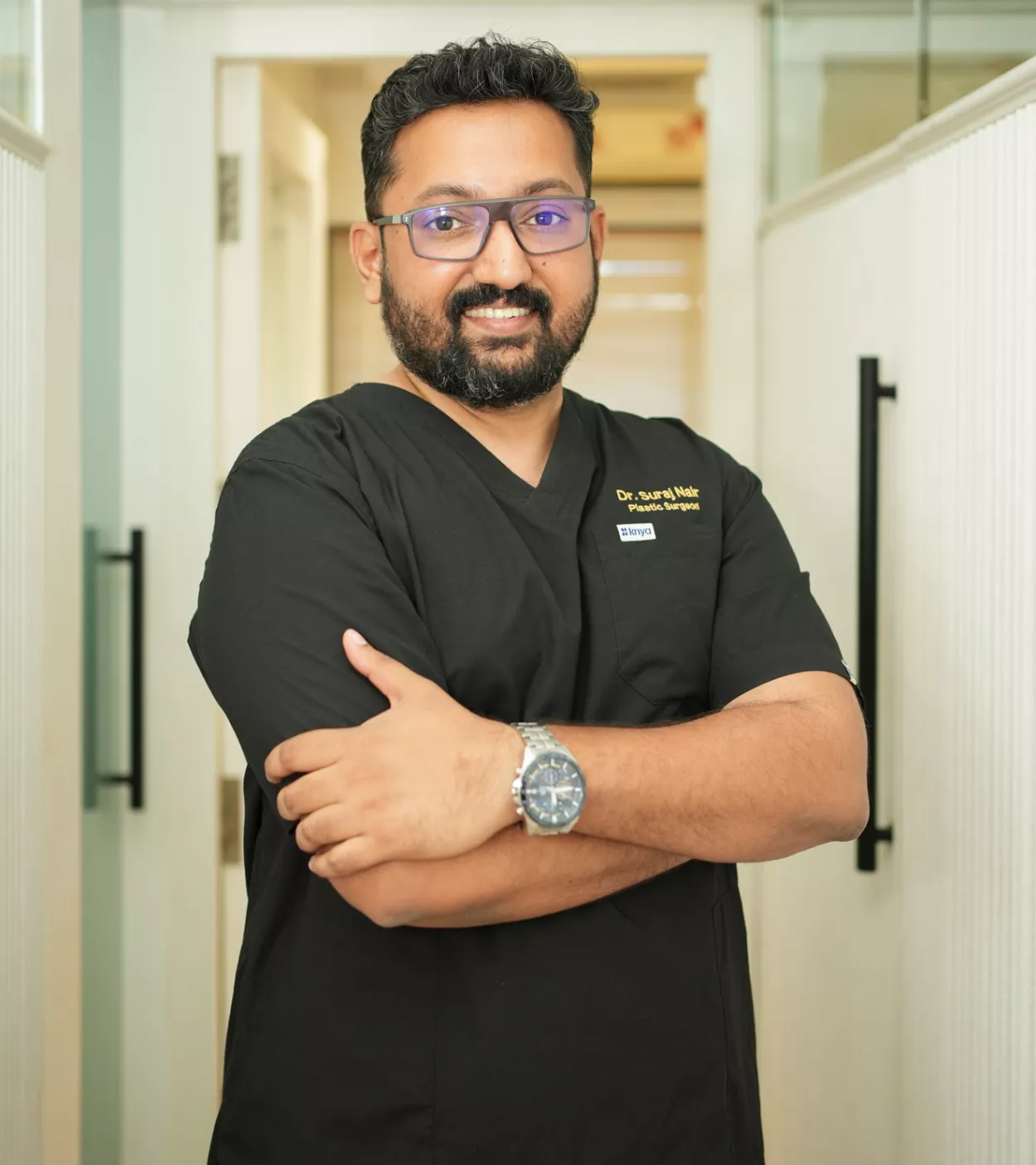
Dr. Suraj Nair
Trained at PGIMER, Chandigarh, Dr. Nair is a highly experienced breast cosmetic surgeon known for performing numerous breast augmentations, reductions, and lifts with natural outcomes.

Dr. Sanket Shetty
M.Ch Plastic Surgeon with international training at Royal Stoke Hospital, UK, experienced in advanced aesthetic and reconstructive surgeries.

Dr. Lukesh Rathod
With over 10 years of experience, Dr. Rathod specializes in minimally invasive aesthetic procedures and advanced skin treatments
Pilonidal Sinus Treatment Options We Offer
Surgical Excision
Complete removal of the sinus tract, Reduces chances of recurrence
Minimally Invasive Techniques
Smaller incisions, Faster recovery
Flap Surgery (for complex cases)
Used in recurrent or severe cases, Promotes better healing
Get lasting relief from pain and infection with pilonidal sinus surgery in Mumbai.
Take the first step towards permanent relief today — Book your consultation with a trusted pilonidal sinus surgeon in Mumbai.
What is a Pilonidal Sinus?
A pilonidal sinus (medical classification ICD-10 code L05) is a small tunnel or tract that forms in the skin, most commonly at the top of the natal cleft near the tailbone. It typically contains hair, skin debris, and can become infected, leading to a painful, pus-filled abscess with swelling and discharge if left untreated.
Why It Forms - Hair, Friction and Pressure
A pilonidal sinus develops when loose hair, combined with friction and pressure in the natal cleft, becomes embedded beneath the skin surface, triggering an inflammatory response and tunnel formation. Prolonged sitting, repetitive friction (common in occupations or activities involving extended sitting), a deep natal cleft, excess body hair in the area, and poor local hygiene all contribute to the risk of developing this condition.
Umbilical Pilonidal Sinus - A Rarer Variant
While the classic location is near the tailbone, pilonidal sinus can occasionally occur near the belly button – known as umbilical pilonidal sinus. This variant follows the same underlying mechanism of hair and debris becoming trapped beneath the skin, but in a different anatomical location, and is treated using the same principles of surgical removal.
Who is Most at Risk?
Pilonidal sinus is most commonly seen in young adults between the ages of sixteen and thirty, and is more frequent in men than women. Risk factors include a sedentary lifestyle or occupation involving prolonged sitting, obesity, a deep natal cleft, excess hair in the affected area, and a family history of the condition.
Pilonidal Sinus Treatment Options at Navaa
Treatment ranges from conservative management for very mild cases to surgical excision or flap reconstruction for established or recurrent disease. At Navaa, the appropriate option is determined after a direct assessment of your specific presentation.
Non-Surgical Management - When It Helps and Its Limits
For an acute abscess, initial management may involve incision and drainage to relieve pain and clear infection, along with antibiotics where needed. However, antibiotics and drainage alone address the infection, not the underlying sinus tract itself, which is why they rarely provide a permanent solution and the sinus commonly recurs unless the tract is surgically addressed.
Laser Pilonidoplasty (LPP)
Laser pilonidoplasty is a minimally invasive technique in which laser energy is used to precisely ablate (destroy) the lining of the sinus tract from within, typically through a small incision, with minimal damage to surrounding tissue. It offers a notably shorter recovery than traditional excision – typically seven to ten days – and is well suited to appropriately selected cases, particularly where the sinus tract structure allows for this less invasive approach.
Excision Surgery - Open vs Closed Healing
Excision surgery surgically removes the sinus tract and any surrounding affected tissue. The resulting wound can be managed in two ways: left open to heal gradually from the base upward (open wound healing, which takes longer – typically four to six weeks – but carries a lower infection risk in complex or heavily infected cases), or closed with sutures immediately (closed wound healing, which heals faster – typically two to four weeks – but carries a somewhat higher risk of wound breakdown in certain cases). Your surgeon will recommend the appropriate approach based on your specific presentation.
Limberg Flap (Rhomboid Flap) Surgery
Limberg flap surgery is a specific technique particularly effective for recurrent or extensive pilonidal sinus. The sinus tract is excised in a rhomboid (diamond) shape, and a flap of healthy tissue from the adjacent buttock area is rotated into the defect to close it. Because this technique flattens the natal cleft as part of the closure, it directly addresses one of the key mechanical factors that caused the sinus to form in the first place, which is why it is associated with notably lower recurrence rates than simple excision.
Z-Plasty Surgery
Z-plasty is another flap-based reconstructive technique, particularly useful for recurrent or complex cases where straightforward excision has not given a lasting result. A Z-shaped incision creates two triangular flaps of skin that are transposed to redistribute tension across the wound and flatten the gluteal cleft, improving both healing and the durability of the result. Variants such as double Z-plasty are available for more extensive or complex presentations.
Why Flap Surgery Has Lower Recurrence - Flattening the Cleft
This is the single most important concept for understanding why some pilonidal sinus surgeries succeed long-term while others recur. Simple excision removes the visible sinus tract but does not change the underlying anatomy – a deep natal cleft continues to trap hair, sweat, and debris, and friction continues at the same site, creating conditions for a new sinus to form. Flap techniques like Limberg flap and Z-plasty are specifically designed to flatten and reshape this area as part of the closure, genuinely reducing the depth of the cleft and the friction within it. This is why flap surgery is generally the preferred approach for patients with recurrent disease, even though it is a more involved procedure than simple excision.
Pilonidal Sinus Surgery – What to Expect
When Conservative Care May Be Enough
A single, small, uninfected sinus pit with no history of abscess or recurrence may occasionally be monitored with good hygiene and hair removal in the area. However, once infection, pus, abscess formation, or any recurrence has occurred, surgical treatment is generally the only path to a lasting resolution.
When Surgery Becomes Necessary
Surgery is indicated for repeated infections, pus or discharge, a painful abscess, multiple sinus openings, or any case that has not responded to conservative management. Patients with a first-time, uncomplicated abscess may be managed initially with drainage, but a formal surgical plan for the underlying sinus tract is generally still needed to prevent recurrence.
Addressing Homeopathy and Ksharasutra Claims Honestly
Patients researching pilonidal sinus treatment will encounter claims about homeopathic remedies and Ksharasutra (a traditional Ayurvedic thread-based treatment) offering a complete cure. It is important to be clear and honest about this: there is no reliable scientific evidence that these approaches permanently resolve an established pilonidal sinus tract. They may offer some symptomatic relief for certain patients, but the underlying tract typically persists, and continued discharge during and after such treatments is commonly reported. For a genuinely permanent resolution, surgical removal of the sinus tract remains the most reliable evidence-based option.
How Pilonidal Sinus Surgery Works at Navaa - Step by Step
Assessment
Your surgeon examines the affected area, assesses the size, depth, and complexity of the sinus tract, and reviews your history of infection or previous treatment. Imaging such as ultrasound may be used when needed. Based on the assessment, the most appropriate treatment approach is recommended, along with expected recovery and costs.
Anaesthesia and Preparation
Depending on the extent of surgery, the procedure may be performed under local anaesthesia with sedation, spinal anaesthesia, or general anaesthesia. The area is prepared and, for flap procedures, the flap design is carefully planned before surgery.
The Procedure
For laser pilonidal sinus treatment, a fine laser probe is used to treat the sinus tract and affected tissue. For more extensive disease, the sinus tract may be removed and the wound left open to heal or closed with sutures. Flap procedures reposition nearby tissue to close the defect and flatten the cleft. The procedure typically takes around 30 minutes to 2 hours, depending on the technique.
Recovery and Follow-Up
Mild pain and discomfort are common during the first week and can be managed as advised. Keep the wound clean and follow dressing instructions. Healing continues over the following weeks, with activities gradually resumed as recovery progresses. Good hygiene and avoiding prolonged pressure can help support healing and reduce recurrence.
Pilonidal Sinus Surgery Cost in Mumbai
The cost of pilonidal sinus surgery at Navaa depends on the technique used, the complexity and size of the sinus, and whether this is a first-time or recurrent case. A detailed, transparent cost estimate is provided at consultation after a direct assessment.
Factors That Affect the Cost
– Technique: laser pilonidoplasty, excision, Limberg flap, and Z-plasty each have different levels of complexity and cost
– Complexity: recurrent cases, multiple sinus tracts, or extensive disease require more involved surgery than a straightforward first-time presentation
– Anaesthesia type: local anaesthesia with sedation costs less than spinal or general anaesthesia used for more extensive procedures
– Hospital stay: simple procedures are day-care; flap surgery may require a short overnight stay
– Wound care approach: open wound healing requires more extensive follow-up dressing support than closed healing
Insurance and Payment Options at Navaa
Pilonidal sinus surgery is generally considered a medically necessary procedure and is typically eligible for health insurance coverage in India, as it addresses a genuine surgical condition rather than a cosmetic concern. Navaa provides the necessary medical documentation to support your insurance claim, and flexible EMI options are available through our financial partners for costs not covered by insurance.
Recovery and Results
– Laser pilonidoplasty offers the shortest recovery among surgical options, typically seven to ten days
– Closed excision heals in approximately two to four weeks; open wound healing takes longer, typically four to six weeks, but may be preferred for more infected or complex cases
– Flap surgery (Limberg or Z-plasty) recovery is typically three to five weeks, reflecting the more extensive nature of the reconstruction
– Avoid cycling for six to eight weeks after surgery, and avoid swimming until the wound has fully healed, to protect the healing area from friction and infection risk
– Flap techniques are associated with meaningfully lower recurrence rates than simple excision, because they address the underlying cleft depth and friction, not just the visible sinus
– Good long-term hygiene and hair removal in the treated area support lasting results regardless of which technique is used
For patients concerned about scarring, particularly with flap procedures, this can be addressed separately once the wound has fully healed — see Scar Revision Surgery in Mumbai for more on scar management at Navaa.
Our Approach to Lasting Results
At Navaa, we approach pilonidal sinus surgery with an understanding that recurrence is the outcome patients fear most, often having already been through a prior treatment that did not last. This is why technique selection at Navaa is guided by more than simply removing the visible sinus tract – for recurrent or higher-risk cases, we recommend flap-based techniques that address the underlying anatomy of the natal cleft directly. We also provide this care with the discretion and respect that a condition in this area of the body genuinely warrants. For a full view of reconstructive treatments at Navaa, explore our Reconstructive Treatments at Navaa.

Treat recurrent pilonidal sinus effectively with advanced surgical care at Navaa.
Take the first step towards infection-free healing today — Book your consultation with an expert pilonidal sinus specialist in Mumbai.

Visit Best Clinic for pilonidal sinus surgery in Mumbai.
Navaa Aesthetics – Plastic Surgery Clinics
4th floor, 405, Morya Estate, New Link Rd, opp. Infinity Mall, Veera Desai Industrial Estate, Andheri West, Mumbai
Frequently Asked Questions About Pilonidal Sinus Surgery in Mumbai
Can pilonidal sinus be cured without surgery?
Which surgery has the lowest recurrence rate?
Is pilonidal sinus surgery covered by insurance?
How long is recovery after pilonidal sinus surgery?
Is pilonidal sinus surgery painful?
Can pilonidal sinus come back after surgery?
At what age does pilonidal sinus usually occur?
What happens if pilonidal sinus is left untreated?
Have More Questions?
Still have questions or need personalised guidance? Our experts are here to help you make informed and confident decisions—every step of the way.
⭐⭐⭐⭐⭐ Rated 4.9/5 by 500+ Patients in Mumbai
Get lasting relief from pilonidal sinus with expert surgical care.
Navaa Plastic and Cosmetic Surgery Clinic, Andheri, Mumbai
Book your consultation today