
Does breast augmentation cause cancer
Breast augmentation remains one of the most researched cosmetic procedures worldwide, with millions of women safely undergoing the surgery each year, but for many women, the decision goes far beyond aesthetics. If you’ve been considering breast augmentation, chances are you’ve already spent hours researching implants, recovery, results, and safety concerns. And somewhere during that search, one question probably stood out: Can breast implants cause cancer? This fear is completely natural, especially when it comes to concerns about cancer.
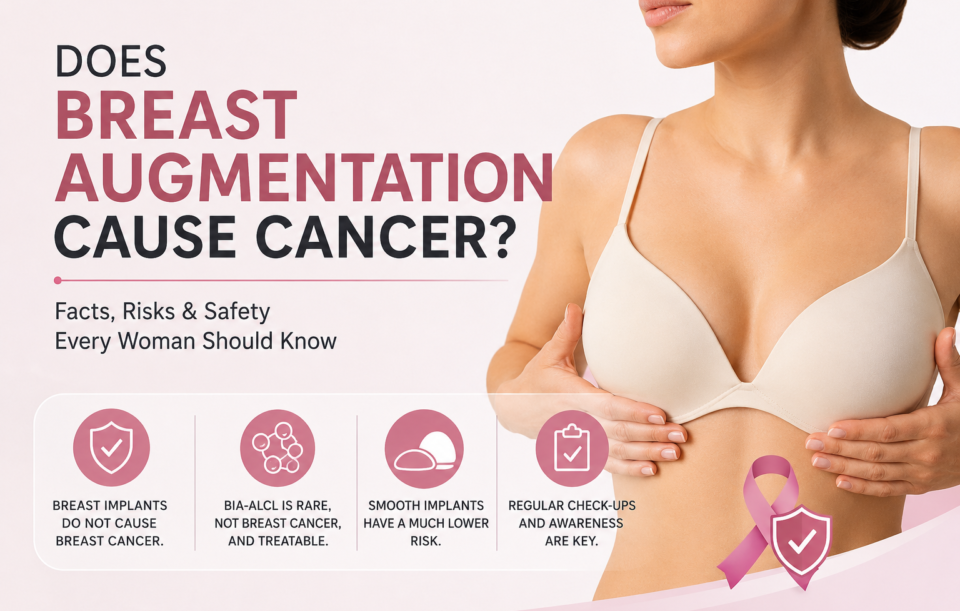
With so much conflicting information online, it’s easy to feel confused or overwhelmed and this deserves a clear, honest answer backed by medical facts rather than fear or misinformation. The truth is that breast implants do not cause breast cancer, but there are certain rare implant-related conditions every woman should understand before undergoing surgery. In this blog, we break down the facts, risks, and important safety information you should know before considering breast augmentation.
Does Breast Augmentation Directly Cause Breast Cancer?
No. Extensive clinical research has shown that breast implants, whether silicone or saline, do not increase the risk of developing breast cancer. Major organisations including the FDA and the American Society of Plastic Surgeons have consistently stated that women with breast implants are not at a higher risk of breast cancer compared to women without implants.
Understanding BIA-ALCL: The Rare Implant-Related Cancer Risk
While breast implants do not cause breast cancer, there is a rare condition known as Breast Implant-Associated Anaplastic Large Cell Lymphoma (BIA-ALCL) that patients should understand.
BIA-ALCL is not breast cancer. It is a rare type of lymphoma, a cancer affecting the immune system, that can develop in the scar tissue or fluid surrounding a breast implant.
The condition is uncommon and, in most cases, highly treatable when diagnosed early. Research has shown that the risk is primarily linked to textured breast implants, especially certain textured implants that were recalled globally in 2019.
Smooth implants have a significantly lower association with BIA-ALCL, which is why many plastic surgeons today prefer smooth-surface implants for breast augmentation procedures.
Silicone vs Saline Implants: Is One Safer Than the Other?
One of the biggest misconceptions about breast augmentation is that silicone implants are more dangerous than saline implants. In reality, the concern is not related to the material inside the implant.
The risk associated with BIA-ALCL is linked to the surface texture of the implant shell, not whether the implant is filled with silicone gel or saline solution.
Both silicone and saline implants can be available in smooth or textured forms. Current evidence suggests that smooth implants carry a much lower risk compared to textured implants.
This makes your surgeon’s implant selection and surgical planning far more important than the implant fill material alone.
Symptoms You Should Never Ignore After Breast Augmentation
Most women with breast implants never experience serious complications. However, it’s important to stay aware of any unusual changes and consult your surgeon if needed.
Seek medical advice if you notice:
- Sudden swelling in one breast
- Fluid buildup around the implant
- A new lump in the breast or underarm
- Persistent pain or unusual firmness
- Skin rash or changes around the implant area
In cases of BIA-ALCL, these symptoms often appear several years after breast augmentation surgery, commonly between 8–10 years after implant placement. Early diagnosis plays a major role in successful treatment outcomes.
Can Women With Breast Implants Still Get Mammograms?
Yes, absolutely. Women with breast implants can safely undergo mammograms and routine breast cancer screening.
It’s important to inform your radiologist before the scan so they can use specialised imaging techniques designed for patients with implants. While implants can obscure a small portion of breast tissue on standard imaging, experienced radiologists can still perform effective and accurate screening.
Regular breast check-ups, self-examinations, and routine imaging remain essential regardless of whether you have implants.
Is Breast Augmentation Still Safe?
Breast augmentation continues to be one of the safest and most commonly performed cosmetic surgeries when carried out by qualified and experienced plastic surgeons.
At Navaa, our board-certified surgeons use FDA-approved, clinically tested implants and follow strict safety protocols to ensure patient wellbeing at every stage of the procedure.
Choosing the right implant type, understanding your options, and attending regular follow-ups are key to achieving safe and successful long-term results.
For women who prefer to avoid implants entirely, fat transfer breast augmentation can also be an excellent alternative. This technique uses your body’s own fat to create a subtle, natural-looking enhancement without implant-related risks.
If you’re considering breast augmentation and have concerns about implant safety, cancer risks, or the best option for your body, a personalised consultation with an experienced plastic surgeon is always the best first step.
Every woman deserves complete transparency and expert guidance before making decisions about breast augmentation. At Navaa, our surgeons take the time to understand your goals, explain every option clearly, and help you make informed choices with confidence.
Book a consultation with Navaa’s expert surgeons today to discuss breast augmentation, implant safety, and the best treatment plan tailored to you.
Frequently Asked Questions
Q1. Does breast augmentation increase the risk of breast cancer?
No. Current clinical research shows that breast implants do not increase the risk of breast cancer. Women with implants should continue regular screenings and breast self-examinations as recommended.
Q2. What are the early symptoms of BIA-ALCL?
Common symptoms include unexplained swelling, fluid buildup around the implant, pain, or new lumps in the breast or armpit. These symptoms typically develop years after breast augmentation surgery.
Q3. Should breast implants be removed if there are no symptoms?
No. The FDA does not recommend removing breast implants in patients who have no symptoms or complications. Regular monitoring and routine follow-ups are usually sufficient.
Q4. Are textured breast implants still used?
Following the global recall of certain textured implants in 2019, many surgeons now prefer smooth implants due to their significantly lower association with BIA-ALCL.
Q5. Is fat transfer breast augmentation safer than implants?
Fat transfer breast augmentation eliminates implant-related risks because it uses your body’s own fat. It is generally suitable for women looking for a modest and natural-looking increase in breast volume.


