
Breast Augmentation Scars After 2 Weeks: What to Expect
If you are two weeks post-op from breast augmentation surgery and staring at your incision lines wondering if this is normal — it almost certainly is. The two-week mark is still very early in the healing process, and understanding what is happening beneath the skin can make recovery far less stressful.
What Do Breast Augmentation Scars Look Like at 2 Weeks?
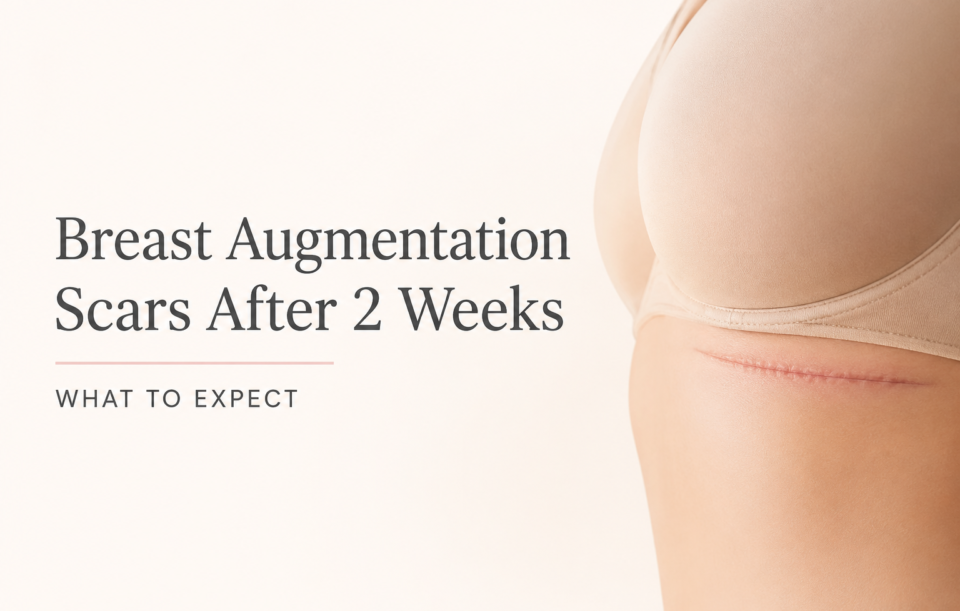
At two weeks after breast implant surgery, your scars will typically appear:
- Red or dark pink in colour
- Slightly raised or firm to the touch
- Possibly itchy – a sign that healing is actively occurring
- Surrounded by mild residual swelling or bruising
This is completely normal. The body is in the active phase of healing, producing collagen to close and strengthen the incision site. The scar has not yet begun to fade, that process takes several more weeks to months.
Where Are the Scars Located?
The position of breast augmentation scars depends on the incision type used:
- Inframammary fold (under the breast crease) – most common; hidden within the natural fold
- Periareolar (around the nipple edge) – blends into the areola’s colour transition
- Transaxillary (in the armpit) – no visible scar on the breast
Your surgeon will choose the best approach based on your anatomy and implant type.
Week-by-Week Scar Healing Timeline
Week 1–2
Incisions are closed and beginning to heal. Scars appear red, firm, and slightly raised. Swelling and bruising are still present.
Week 3–6
Redness begins to soften. Swelling reduces noticeably. The scar may feel itchy or tight as collagen remodelling continues.
Month 2–3
Scars start to flatten and lighten in colour. Silicone sheets and scar gels can be introduced at this stage (with surgeon approval).
Month 6–12
Most breast augmentation scars fade significantly to a pale, thin line that blends naturally with surrounding skin.
Full scar maturation can take up to 12 to 18 months. Patience is key.
How to Minimise Breast Augmentation Scars
There are several evidence-backed ways to support better scar healing:
- Silicone scar sheets or gel – start once incisions are fully closed; very effective for flattening and fading
- Sun protection – UV exposure can permanently darken scars; keep covered or use SPF
- Gentle massage – from around week 6, helps break down collagen build-up
- Avoid smoking – significantly impairs wound healing and worsens scarring
- Follow your surgeon’s aftercare instructions – the single most important factor in your outcome
What Is Normal vs. What to Watch For
Most breast augmentation scars at two weeks fall within the normal range. However, contact your surgeon if you notice:
- Discharge, pus, or an unusual smell from the incision
- Excessive redness, heat, or swelling that is getting worse
- The wound appears to be reopening
- Fever or flu-like symptoms
These could be signs of infection or poor healing that require prompt attention.
Will the Scars Be Visible Long-Term?
For most patients, breast implant scars become barely noticeable within 12 months. Skin tone, genetics, incision placement, and post-operative care all influence the final result.
At Navaa, our surgeons will discuss incision placement, scar management, and realistic outcomes at your consultation, so you go in fully informed.
Frequently Asked Questions
Q1. Are breast augmentation scars permanent?
Scars fade significantly over 12 to 18 months and are typically well-concealed by the breast’s natural contours, they do not disappear entirely but become very discreet.
Q2. When can I start using scar gel?
Most surgeons recommend silicone gel or sheets from around 4 to 6 weeks post-surgery, once the incision is fully closed.
Q3. What is the breast augmentation cost in India?
Visit Navaa for a personalised consultation and detailed pricing based on your goals and implant type.
Questions about recovery? The team at Navaa is here to guide you.


