Written By
Navaa Team
Reviewed By
Dr. Suraj Nair
About the Reviewer
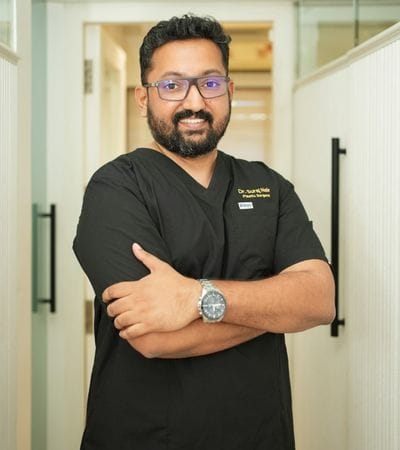
Dr. Suraj Nair
Dr. Suraj Nair is a Plastic and Cosmetic Surgeon with an M.Ch in Plastic Surgery, M.S. in General Surgery, and M.B.B.S. He specializes in facial aesthetics, body contouring, reconstructive surgery, and surgical and non-surgical cosmetic procedures.
▣
Published on
May 2, 2026
◷
Reading Time
4 min read
When Does Swelling Go Down After Breast Augmentation?
Swelling after breast augmentation surgery is completely normal and one of the most common recovery concerns. Your breasts may look larger, sit higher, and feel firmer than expected, but understanding the swelling timeline makes the process far less stressful.Why Does Swelling Happen After Breast Augmentation?
Swelling is your body’s natural response to surgery. During breast implant surgery, tissues are separated to create a pocket for the implant, triggering an inflammatory healing response and fluid accumulation. It is a sign your body is healing, not a sign something has gone wrong.The Breast Augmentation Swelling Timeline
Days 1–3
Swelling begins immediately and peaks within the first 3 days, the most uncomfortable phase. Breasts appear larger than intended and sit high on the chest. Pain medication and a surgical bra help manage discomfort.Week 1–2
Swelling and bruising are at their peak. By the end of week two, most patients feel noticeably better and swelling begins to reduce. Minor asymmetry is normal, each breast heals at its own pace.Weeks 3–6
The most significant improvement happens here. Swelling decreases steadily, breasts soften, and implants begin to drop into a more natural position, the “drop and fluff” process. Most patients feel like themselves again and can return to light exercise.Months 2–3
The majority of swelling has resolved. Breasts look noticeably more natural and settled, with the final shape becoming clearer.Months 4–6
Any residual swelling subsides. Breast implants fully settle and the true result of your breast augmentation becomes visible. Scars continue to fade.What Affects How Long Swelling Lasts?
Factors that influence how quickly swelling resolves:- Implant placement — implants placed under the muscle (submuscular) typically involve more initial swelling than over-the-muscle placement
- Implant size — larger implants may cause more swelling and take slightly longer to settle
- Individual healing rate — age, overall health, and genetics all play a role
- Post-operative care — following your surgeon’s aftercare instructions closely makes a significant difference
Tips to Reduce Swelling Faster
- Wear your surgical bra as directed — compression reduces fluid build-up
- Sleep on your back with your upper body slightly elevated
- Avoid salt — sodium worsens swelling and water retention
- Stay hydrated — supports the body’s natural healing process
- Avoid strenuous activity — overexertion prolongs swelling
- Attend follow-up appointments — your surgeon monitors progress and advises accordingly
When to Contact Your Surgeon
Contact your surgeon if you notice:- Swelling worsening rather than improving after the first week
- Excessive redness, warmth, or hardness in one breast
- Fever or flu-like symptoms
- Sudden increase in pain or tightness