Cleft Lip and Palate in Adults: Treatment Options
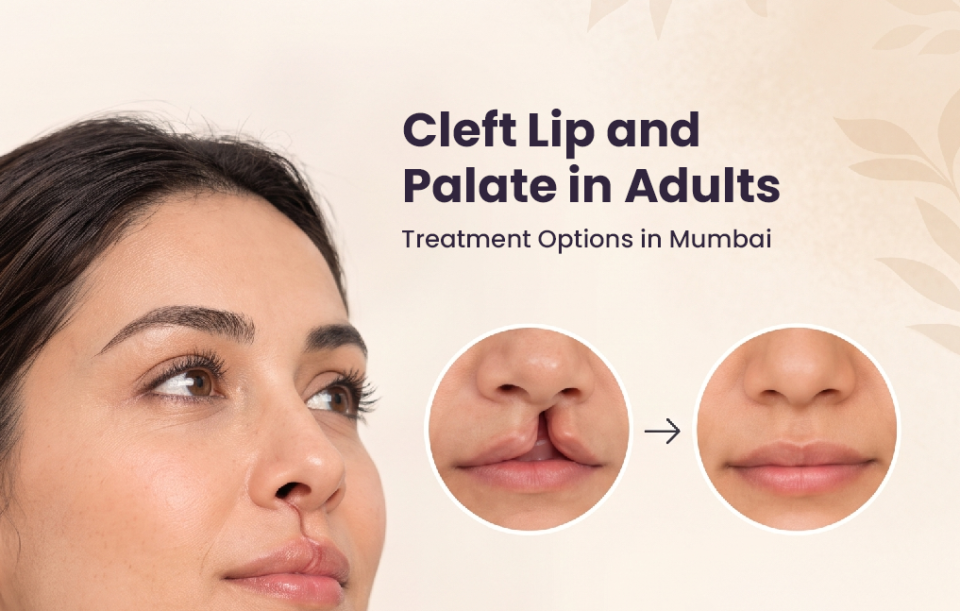
Most of the treatments for cleft lip and palate happen during childhood, so most believe that nothing more can be done when one becomes an adult. However, this is wrong. Patients who have undergone partial treatment while young, have never had any surgery before, or have issues in the future may undergo treatment for cleft palate adult conditions. These treatments will help the patient to speak, eat, look, and feel better.
Why Adults Still Seek Cleft Treatment
There are various reasons why people might be in need of cleft treatment for the first time or for more advanced care. For some individuals, there was no specialized pediatric cleft care at their disposal when they were growing up, especially in places where the procedure was not popularly offered many decades ago, and so they are now able to undergo the operation. In such situations, people prefer to visit at Navaa Plastic & Cosmetic Surgery because specialists develop individual treatments depending on the issues which have been left by the previous treatment. Some individuals underwent surgery during their childhood that managed with the repair but did not address certain things like a noticeable scar, slight nasal asymmetry, a tiny fistula in the palate, and jaw difference, which became increasingly visible during their teen years as they finished their face development. There are some who just want their outcomes enhanced from an already existing functional but not cosmetically perfect result. However big or small, there is definitely a considerable number of cleft lip adults and cleft palate adults. Treatment methods have greatly developed specifically to suit the particularities of adult patients undergoing treatment.
Treatment Options for Adults
Cleft Lip Scar Revision
Scar revision surgery to reduce the appearance of a scar is another type of surgery looked for by individuals with cleft lip. Scars can develop over time and become darker, thicker, less defined, and misaligned with the rest of the face because of the aging process. No matter what the reason for its present appearance, scar revision works by carefully reopening and reclosing the scar for cleaner result.
Cleft Rhinoplasty
One of the most common problems with adults who have had clefts in the past is that of nasal asymmetry, as the nose grows and develops up until teenage years. This is because cleft rhinoplasty will reshape the nose and improve nasal breathing in certain cases, when the nasal partition is involved.
Jaw Alignment Surgery
Adults with a history of cleft condition sometimes experience an irregularity of growth of their jaw bones such that the two jaws do not grow proportionately. This condition is treated through maxillofacial surgery, where the surgeon adjusts the position of the jaw to ensure proper growth.
Palate Fistula Repair and Speech Surgery
Fistula, which is a minor hole that exists in the roof of the mouth, may remain even after surgical repair of the palate in childhood, resulting in food and drink entering the nasal passage or leading to nasal quality of voice. Cleft palate surgery would consist of closing the fistula as well as doing any speech surgery if required.
Fat Grafting for Lip Volume
It is possible that childhood surgery to correct lips might have resulted in some degree of volume imbalance or flattening of the lip line. In such cases fat grafting is used to restore lost volume by using some of the patient’s own fat, taken from some other part of the body, to regain volume balance.
First-Time Repair for Adults Never Treated
For those adults who never had their cleft lips or palate fixed during childhood, the procedure is indeed possible to undergo for the first time as an adult. Although the primary surgical procedures (cheiloplasty and palatoplasty) are not very different, healing might take a little longer and speech results might vary a little depending on whether or not the palate was ever repaired during the crucial speech development period.
What Recovery Looks Like
The time taken for the recovery process is very different according to the operation done. Revision of scars and fat transfer operations take the shortest recovery time, with the patient getting back to normal life in a week or two with swelling and slight tenderness, but with no evidence of an operation being done. The cleft rhinoplasty operation takes between two and three weeks to recover from the swelling that is associated with the operation for one to go back to work or other activities. It will still take several months before the patient can see the actual result of the operation because of the remaining swelling within the nose. It takes longer than other operations to recover from the jaw correction and first-time correction in the adult patient.
Is It Ever Too Late?
Absolutely not! Although best for speech formation and facial development, surgical treatment during early childhood years is definitely not the only age limit for performing the operation. The healing ability of adult tissue is high, and the majority of operations listed above are regularly carried out in cleft palate adults with excellent and proven results. The only thing that differs with age is the aim of the operation: in adults, it is usually aimed at improving the existing function and aesthetic appearance rather than creating something new. However, even adults can be surprised at how well the result will be even if the defect is fixed for many years. An individual analysis is the only way to determine which combination of surgeries suits your case.
FAQs
Can a cleft palate be fixed in adults?
Yes, whether it is a repair done for the first time or repairing a residual fistula from surgery in childhood, the repair is effective in adults.
Will adult cleft surgery leave new scars?
Some procedures, such as lip scar revision, use an existing scar without causing another large scar. Some procedures, such as jaw surgery, will have smaller incisions, which may be located for concealment purposes.
How many surgeries will I need?
It is completely dependent on your own personal issues; some adults only require one procedure such as scar revision, but others may require multiple procedures dealing with scars, noses, and jaw lines.
Is adult cleft surgery only cosmetic?
No, because many medical treatments for adults such as fistula repair surgery, speech correction, and jaw alignment surgery involve solving a functional problem, even if cosmetic enhancement is included in the treatment process as well.


