
- Home
- About Us
- Treatments
-
-
- Skin
-
- Face
-
- Breast
- Reconstructive
-
- Body
- Genitalia
- Maxillofacial
-
-
- Doctors
- Blogs
- Gallery
- Contact Us
- Home
- About Us
- Treatments
-
-
- Skin
-
- Face
-
- Breast
- Reconstructive
-
- Body
- Genitalia
- Maxillofacial
-
-
- Doctors
- Blogs
- Gallery
- Contact Us
Vitiligo Treatment in Mumbai - Surgical & Laser Repigmentation at Navaa Plastic & Cosmetic Surgery

Vitiligo is a visible condition that affects far more than the skin – the appearance of white patches can significantly impact confidence, social comfort, and quality of life. While vitiligo cannot currently be permanently cured, a wide range of medical, laser, and surgical treatments can restore pigmentation to affected areas, halt progression, and give patients back a sense of control over their skin and their life.
At Navaa Plastic & Cosmetic Surgery, vitiligo treatment is approached with both clinical honesty and surgical expertise. MCh-qualified plastic surgeons offer the full range of options – from topical and light-based therapies to surgical repigmentation techniques including punch grafting and skin grafting for stable vitiligo. Every treatment plan begins with an accurate assessment of your specific presentation, because the right approach for vitiligo depends entirely on its type, stability, and extent.
— Why Choose Us
Why Choose Navaa Plastic and Cosmetic Surgery Clinic for Vitiligo Treatment in Mumbai?
At Navaa Plastic and Cosmetic Surgery Clinic, we combine surgical precision with honest, patient-centred care for every skin condition we treat.
MCh Plastic Surgeons - Surgical Repigmentation Expertise
Surgical repigmentation techniques for vitiligo - punch grafting, suction blister grafting, split-thickness skin grafting - require the precise tissue-handling skills that MCh plastic surgical training specifically develops. At Navaa, vitiligo surgery is performed by MCh-qualified plastic and cosmetic surgeons, the highest postgraduate qualification in plastic surgery in India.
Medical, Laser and Surgical Options All Available
Vitiligo does not have a single right treatment - the appropriate approach depends on whether the condition is active or stable, its extent, and its location. At Navaa, topical and medical management, excimer laser and phototherapy, and surgical repigmentation techniques are all available, allowing your surgeon to recommend the genuinely most appropriate option rather than being limited to whatever a single-technology clinic offers.
Honest Assessment of Stability Before Surgery
Surgical repigmentation only works well on stable vitiligo - patches that have not spread or changed for at least six to twelve months. Operating on active, spreading vitiligo produces poor results and can worsen the condition through a phenomenon called koebnerisation. At Navaa, stability is carefully assessed before any surgical option is recommended, and we will tell you honestly if your vitiligo needs to stabilise further before surgery is appropriate.
Personalised Treatment Planning
Your treatment plan at Navaa is built around your specific vitiligo type, its stability, the areas affected, and your goals - not a standard protocol. Combination approaches, where appropriate, are planned to give you the most effective realistic path to improvement.
Located in Andheri, Mumbai
Modern facilities, advanced technology and patient-focused care in a convenient Mumbai location. Vitiligo treatment - whether medical, laser, or surgical - is a journey that unfolds over months. Our team supports you with consistent follow-up throughout.
Our Results Before and After
Vitiligo treatment before and after results from Navaa - covering surgical repigmentation of stable patches, laser-treated cases, and combination treatment approaches - are available for review at your consultation. Your surgeon will walk you through cases relevant to your specific presentation.
— Our Doctors
Meet Our Expert Team
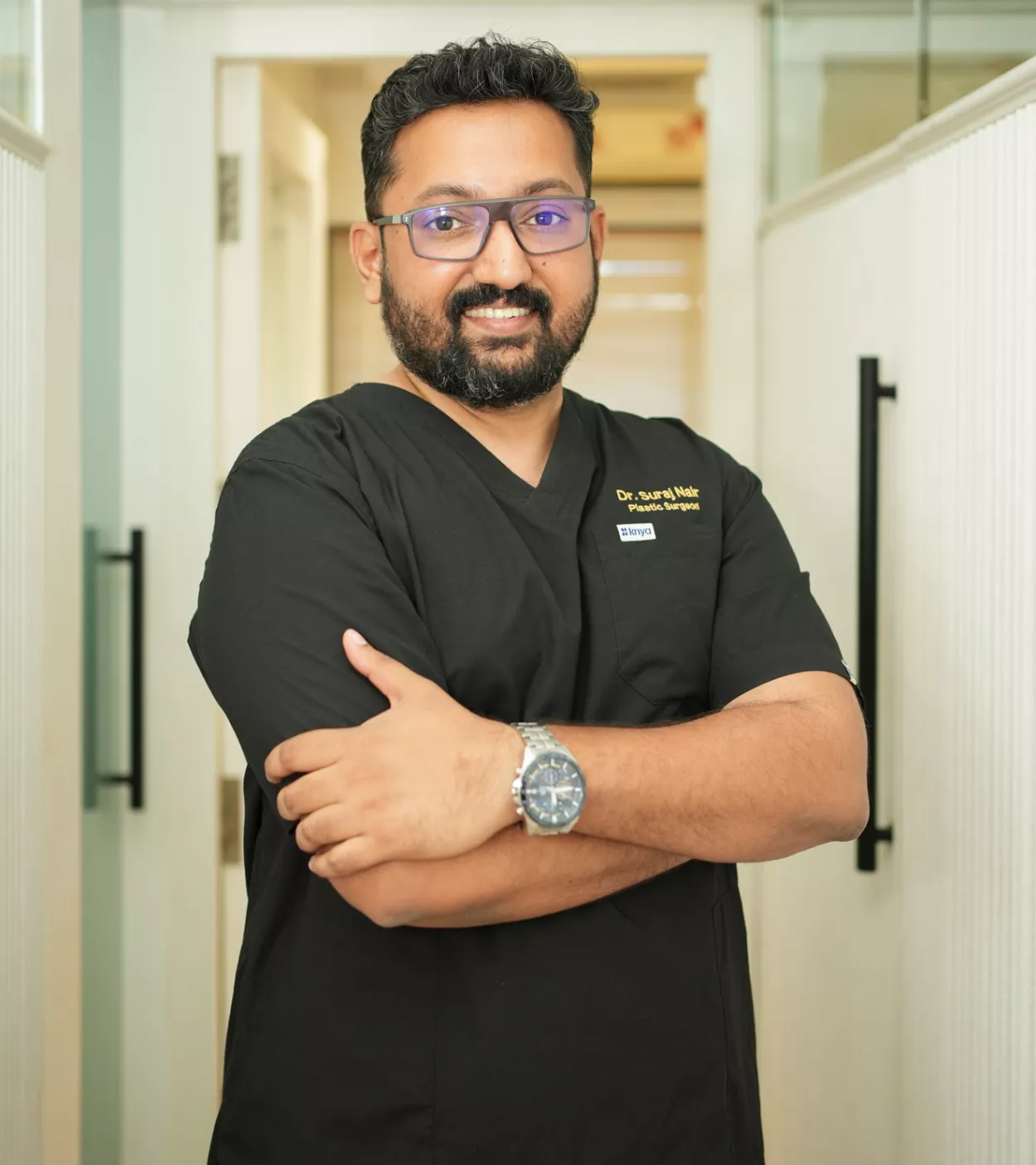
Dr. Suraj Nair
Trained at PGIMER, Chandigarh, Dr. Nair is a highly experienced breast cosmetic surgeon known for performing numerous breast augmentations, reductions, and lifts with natural outcomes.

Dr. Sanket Shetty
M.Ch Plastic Surgeon with international training at Royal Stoke Hospital, UK, experienced in advanced aesthetic and reconstructive surgeries.

Dr. Lukesh Rathod
With over 10 years of experience, Dr. Rathod specializes in minimally invasive aesthetic procedures and advanced skin treatments
Vitiligo Treatment Options at Navaa
Topical and Medical Management
For active or early-stage vitiligo, topical treatment is typically the first-line approach. This includes topical corticosteroids and calcineurin inhibitors (such as tacrolimus ointment), which work by modulating the local immune response that is destroying melanocytes in the affected area. Topical treatment is most effective on the face and areas with good hair follicle density, as hair follicles harbour reservoir melanocytes that can help repopulate the skin. Medical management is typically continued for several months before its effectiveness can be properly assessed.
Phototherapy (NBUVB and PUVA)
Narrowband UVB (NBUVB) phototherapy is one of the most widely used and effective treatments for widespread or actively progressing vitiligo. It involves controlled, regular exposure to a specific UVB wavelength that stimulates melanocyte activity and migration. PUVA (Psoralen plus UVA) is an older but still-used alternative that combines a light-sensitising medication with UVA exposure. Phototherapy requires a sustained course of regular sessions - typically two to three times per week over several months - to achieve meaningful repigmentation, and is generally more effective for facial and truncal vitiligo than for hands and feet.
Excimer Laser Treatment
Excimer laser delivers a concentrated, targeted 308nm UVB wavelength directly to vitiligo patches, offering more precise treatment than whole-body phototherapy with a correspondingly lower cumulative UV exposure to unaffected skin. It is particularly useful for smaller, localised patches and sensitive areas such as the lips, where precise targeting matters. Sessions are typically needed two to three times per week, and visible improvement generally takes eight to twelve sessions or more to become apparent. Mild, temporary redness at the treated site is the most common side effect.
Surgical Repigmentation - Punch and Skin Grafting
For stable vitiligo - patches that have shown no change or spread for at least six to twelve months - surgical repigmentation offers the most reliable and often fastest route to visible colour restoration. Punch grafting involves transplanting tiny punches of pigmented skin from a donor area into the depigmented patch, where the transplanted melanocytes gradually spread pigment across the treated area. Suction blister grafting uses suction to raise thin blisters of pigmented skin, which are then transferred to the vitiligo patch. Split-thickness skin grafting is used for larger stable areas. These techniques are particularly effective for localised, stable patches including segmental vitiligo and lip vitiligo, where precise, controlled grafting produces the best results. See Skin Grafting in Mumbai for the full overview of skin grafting techniques at Navaa.
Micropigmentation and Camouflage
For patients whose vitiligo is not suitable for surgical repigmentation, or as a complementary option, micropigmentation offers a cosmetic solution. This tattoo-like technique deposits carefully colour-matched pigment into the skin's upper layers to visually camouflage depigmented patches, most commonly used for facial and lip vitiligo where precise colour matching is important. This is a cosmetic camouflage approach rather than a biological repigmentation technique - the pigment does not restore natural melanocyte function, but produces an immediate, natural-looking visual improvement for appropriate cases.
Restore even skin tone with advanced vitiligo treatment in Mumbai at Navaa.
Take the first step towards even skin tone today — Book your consultation with a trusted vitiligo specialist in Mumbai.
What is Vitiligo?
Vitiligo is a chronic skin condition in which patches of skin lose their natural pigment, appearing as smooth, white or pale patches against the surrounding normal skin tone. It can affect any part of the body, including the face, hands, lips, and mucous membranes, and can appear at any age, though it most commonly begins before the age of thirty.
Why Vitiligo Happens - The Autoimmune Process
Vitiligo occurs when melanocytes – the specialised skin cells responsible for producing melanin, the pigment that gives skin its colour – are progressively destroyed. In most cases, this destruction is understood to be autoimmune in nature: the body’s own immune system mistakenly identifies melanocytes as a threat and attacks them. The exact trigger for this autoimmune process is not fully understood, but genetic predisposition combined with environmental factors is believed to play a role. Vitiligo is not caused by diet, is not contagious, and does not spread from person to person through any form of contact.
Segmental vs Non-Segmental Vitiligo
Segmental vitiligo affects one side of the body or a specific segment – it typically appears earlier in life, spreads relatively quickly for a period, and then stabilises, often permanently. Because segmental vitiligo tends to stabilise, it responds particularly well to surgical repigmentation techniques once stability is confirmed.
Non-segmental vitiligo is the more common form, typically appearing symmetrically on both sides of the body. It often progresses in cycles of activity and quiescence over the course of a person’s life, which makes ongoing monitoring important and means surgical treatment is only considered during confirmed stable periods.
Correctly identifying which type is present, and assessing its current activity, is a foundational part of the vitiligo consultation, as it directly determines which treatments are appropriate.
Vitiligo vs Other Causes of Skin Colour Change
Not every white or light patch on the skin is vitiligo. Conditions such as pityriasis versicolor (a fungal infection), post-inflammatory hypopigmentation after an injury or skin condition, and idiopathic guttate hypomelanosis (small white spots from chronic sun exposure) can all resemble vitiligo but require entirely different treatment approaches. An accurate diagnosis – sometimes supported by a Wood’s lamp examination or, in uncertain cases, a skin biopsy – is essential before any vitiligo-specific treatment begins. Vitiligo is also worth distinguishing from hyperpigmentation conditions, which involve excess rather than absent pigment. See Skin Pigmentation Treatment in Mumbai for information on hyperpigmentation and dark spot conditions, which are treated very differently from vitiligo.
Who is the Right Candidate for Vitiligo Surgery?
Signs Your Vitiligo May Be Suitable for Surgical Repigmentation
You may be a suitable candidate for surgical repigmentation if:
– Your vitiligo has been stable – with no new patches and no spread of existing patches – for at least six to twelve months
– You have localised, well-defined patches rather than widespread, actively changing depigmentation
– You have segmental vitiligo, which commonly stabilises and responds particularly well to surgical techniques
– Medical or light-based treatments have not produced adequate repigmentation on their own
– You have adequate donor skin available for grafting, with good colour match to the affected area
– You are in good general health with no conditions that significantly impair wound healing
– You have realistic expectations about the gradual nature of repigmentation and the possibility of needing more than one session
Why Stability Matters Before Any Surgical Treatment
Performing surgical repigmentation on active, spreading vitiligo is not just less effective – it can actively make the condition worse. This is because of a phenomenon called the Koebner response, where new trauma to the skin (including surgical trauma) can trigger new vitiligo patches to form at the site of injury in patients whose vitiligo is still active. This is why confirming stability – typically defined as no new patches and no growth of existing patches for at least six to twelve months – is a non-negotiable prerequisite before any surgical option is offered at Navaa. If your vitiligo is not yet stable, your surgeon will discuss medical or light-based management to help achieve stability first.
How Vitiligo Surgery Works at Navaa - Step by Step
Consultation and Stability Assessment
Your consultation begins with a thorough assessment of your vitiligo – its type (segmental or non-segmental), the areas affected, and critically, its stability over the preceding months. Photographic documentation over time is often used to confirm stability objectively. Your surgeon will discuss your history of previous treatments and their effectiveness, and confirm whether surgical repigmentation is appropriate now, or whether further stabilisation is needed first. A complete cost estimate and realistic expectation of the likely outcome are provided before any procedure is booked.
Donor Site Selection
An appropriate donor site is identified – an area of normally pigmented skin, typically the thigh or buttock, that closely matches the colour of the skin surrounding the vitiligo patch. The technique (punch grafting, suction blister grafting, or split-thickness grafting) is confirmed based on the size and location of the patch being treated.
The Procedure
The procedure is performed under local anaesthesia. For punch grafting, small punches of pigmented skin are harvested from the donor site and transplanted into correspondingly sized recipient sites created in the vitiligo patch. For suction blister grafting, suction is applied to the donor site to raise thin blisters, and the tops of these blisters are then transferred to the prepared recipient area. For larger areas, split-thickness skin grafting removes a thin layer of pigmented skin for transplantation. The transplanted tissue is secured and dressed. Procedure duration depends on the size of the area being treated, typically one to three hours. Most patients go home the same day.
Recovery, Aftercare, and Follow-Up
Days 1 to 7: The grafted area is kept protected with dressings. The donor site is also dressed and monitored. Some discomfort and mild swelling at both sites is normal.
Weeks 1 to 3: Graft take is assessed – the transplanted tissue should show early signs of integration. The donor site heals progressively.
Months 1 to 3: Pigmentation begins to spread gradually from the transplanted melanocytes across the treated area. This spread is a gradual biological process, not immediate.
Months 3 to 6: Progressive repigmentation continues to develop and mature. The degree of repigmentation achieved is assessed at this stage, and additional sessions may be planned if further coverage is needed.
For patients supporting their surgical results, PRP Treatment in Mumbai may be considered alongside grafting in select cases to support the healing and regenerative process.
Vitiligo Treatment Cost in Mumbai
The cost of vitiligo treatment at Navaa depends on the treatment type, the extent of the area being treated, and the number of sessions required. A detailed, transparent cost estimate is provided at consultation after the surgeon has assessed your vitiligo and confirmed the treatment plan.
Factors That Affect the Cost
– Treatment type: topical management, phototherapy, excimer laser, and surgical repigmentation each have significantly different cost structures
– Area treated: the size and number of patches being treated affects both surgical and laser treatment cost
– Number of sessions: laser and phototherapy require ongoing sessions over months; surgical repigmentation may require one or more sessions depending on area size
– Technique: punch grafting, suction blister grafting, and split-thickness grafting have different levels of complexity and cost
– Location on the body: facial and lip vitiligo requiring precision work may involve additional planning and technique consideration
EMI & Payment Options at Navaa
Navaa offers flexible EMI options through leading financial partners, making vitiligo treatment accessible without requiring the full cost upfront for a complete course. Our team will discuss payment options at consultation.
Recovery and Results
– Surgical repigmentation recovery involves 1 to 3 weeks of dressing care at both the donor and recipient sites
– Pigmentation spread from surgical grafting is gradual, becoming visible over 1 to 3 months and continuing to develop over 3 to 6 months
– Laser and phototherapy require sustained courses over months, with gradual, cumulative improvement rather than rapid change
– Results vary meaningfully between patients – segmental, stable vitiligo generally responds better to surgical techniques than widespread, non-segmental vitiligo
– Vitiligo is a chronic condition – even successfully treated areas require ongoing monitoring, as new patches can develop elsewhere over time
– Sun protection of treated areas supports even, natural-looking repigmentation and protects surrounding normal skin from excess tanning contrast
Our Approach to Honest, Realistic Care
Vitiligo treatment at Navaa begins with an honest conversation: there is currently no medical procedure that guarantees a permanent cure for vitiligo, and any provider who promises this is overstating what is achievable. What we can offer is an accurate diagnosis, a clear explanation of which treatments are appropriate for your specific presentation and stability, and skilled surgical technique when repigmentation surgery is the right path. We take stability assessment seriously because operating too soon can make things worse, not better. Our goal in every case is a result that genuinely improves your skin and your confidence, built on realistic expectations rather than promises we cannot keep. For a full view of skin treatments at Navaa, explore our Skin Treatments at Navaa.

Improve pigmentation and achieve natural-looking results with expert vitiligo care.
Take the first step towards pigmentation restoration today — Book your consultation with an expert vitiligo doctor in Mumbai.

Visit Best Clinic for vitiligo treatment in Mumbai.
Navaa Aesthetics – Plastic Surgery Clinics
4th floor, 405, Morya Estate, New Link Rd, opp. Infinity Mall, Veera Desai Industrial Estate, Andheri West, Mumbai
FAQs – Vitiligo Treatment in Mumbai
Can vitiligo be cured permanently?
Is vitiligo surgery permanent?
Is vitiligo an autoimmune disease?
Is vitiligo contagious or hereditary?
Which surgery is best for vitiligo?
Is vitiligo linked to thyroid problems?
How long does it take to see results after vitiligo surgery?
Can vitiligo come back after surgery?
Have More Questions?
Still have questions or need personalised guidance? Our experts are here to help you make informed and confident decisions—every step of the way.
⭐⭐⭐⭐⭐ Rated 4.9/5 by 500+ Patients in Mumbai
Restore your skin tone with advanced vitiligo treatment.
Navaa Plastic and Cosmetic Surgery Clinic, Andheri, Mumbai
Book your consultation today