- Home
- About Us
- Treatments
-
-
- Skin
-
- Face
-
- Breast
- Reconstructive
-
- Body
- Genitalia
- Maxillofacial
-
-
- Doctors
- Blogs
- Gallery
- Contact Us
- Home
- About Us
- Treatments
-
-
- Skin
-
- Face
-
- Breast
- Reconstructive
-
- Body
- Genitalia
- Maxillofacial
-
-
- Doctors
- Blogs
- Gallery
- Contact Us
Hair Transplant in Mumbai - FUE & DHI Hair Restoration at Navaa Plastic & Cosmetic Surgery
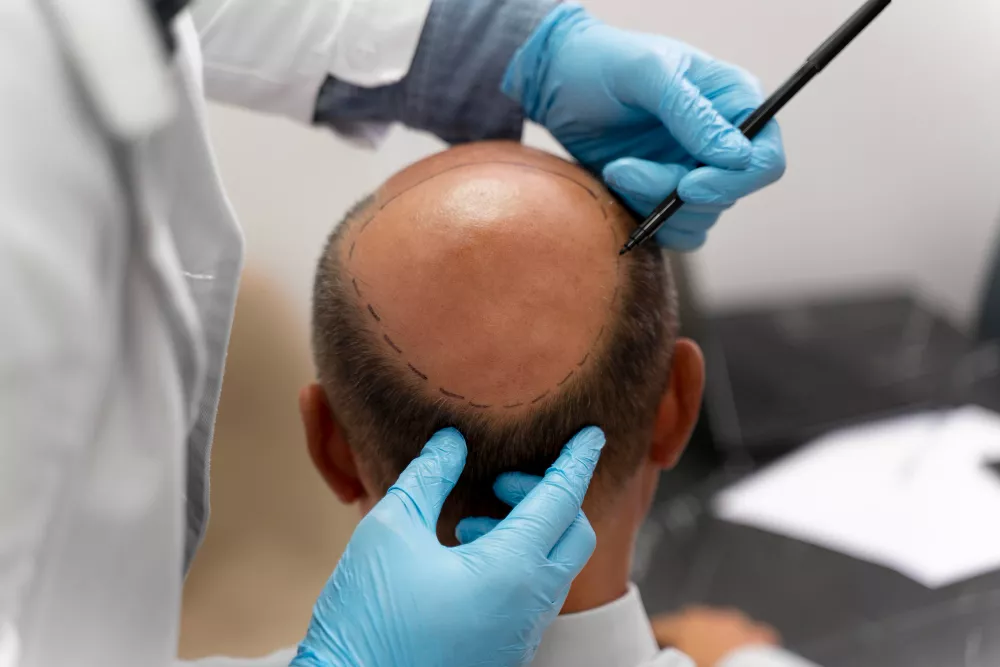
Hair loss is one of the most emotionally significant changes a person can experience. Whether it appears as a gradually receding hairline, thinning at the crown, or diffuse hair loss across the scalp, it can have a real impact on confidence and self-image. Hair transplant surgery permanently restores hair to these areas by using your own healthy hair follicles, which are carefully extracted and transplanted to create a natural, undetectable result.
At Navaa Plastic & Cosmetic Surgery, every hair transplant is performed by MCh-qualified plastic surgeons—the highest surgical qualification in plastic surgery in India. This sets Navaa apart from clinics where procedures may be performed by dermatologists or technician-led teams. From designing the hairline to harvesting and implanting each graft, every stage of the procedure is carried out under the direct supervision of a qualified plastic surgeon, combining surgical precision with aesthetic expertise.
— Why Choose Us
Why Choose Navaa Plastic and Cosmetic Surgery Clinic for Hair Transplant in Mumbai?
At Navaa Plastic and Cosmetic Surgery Clinic, every hair transplant is planned to restore your hair naturally while maintaining facial balance and long-term results.
MCh Plastic Surgeons
Your hair transplant is performed by an MCh-qualified plastic surgeon with specialised training in hair restoration. From planning the hairline to placing every graft, each stage is carried out with precision to create results that look natural and complement your facial features.
FUE, DHI & FUT
Every patient has a different pattern of hair loss. We offer FUE, DHI, and FUT hair transplant techniques, selecting the most suitable option after assessing your scalp, donor area, hair density, and long-term goals rather than following a one-size-fits-all approach.
Natural Hairlines
A natural hairline is one of the most important parts of a successful hair transplant. Your surgeon designs it to match your facial proportions, existing hair pattern, and future ageing, creating a result that blends seamlessly with your natural hair.
Men & Women
Hair restoration is available for both men and women experiencing hair loss. Whether the cause is male pattern baldness, female pattern thinning, traction alopecia, or hormonal changes, your treatment plan is tailored to your individual needs.
Located in Andheri, Mumbai
Our clinic in Andheri combines modern surgical facilities with personalised patient care. From your initial consultation to recovery and follow-up visits, our team remains available to guide and support you throughout your hair restoration journey.
Before & After
During your consultation, you'll have the opportunity to review before-and-after photographs of patients with hair loss patterns similar to yours. These examples help you understand the improvements that may be possible and set realistic expectations before treatment.
— Our Doctors
Meet Our Expert Team
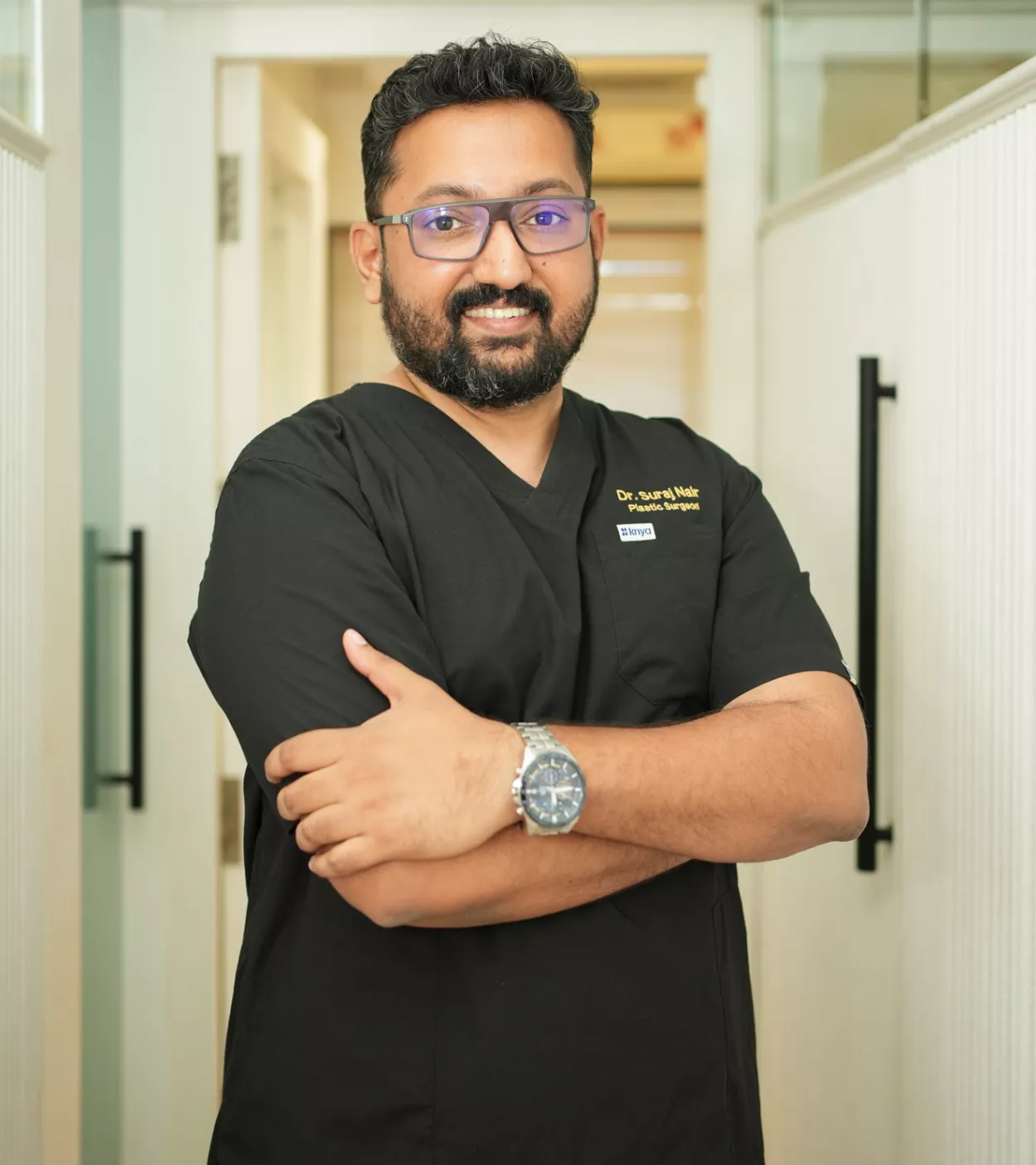
Dr. Suraj Nair
Trained at PGIMER, Chandigarh, Dr. Nair is a highly experienced breast cosmetic surgeon known for performing numerous breast augmentations, reductions, and lifts with natural outcomes.
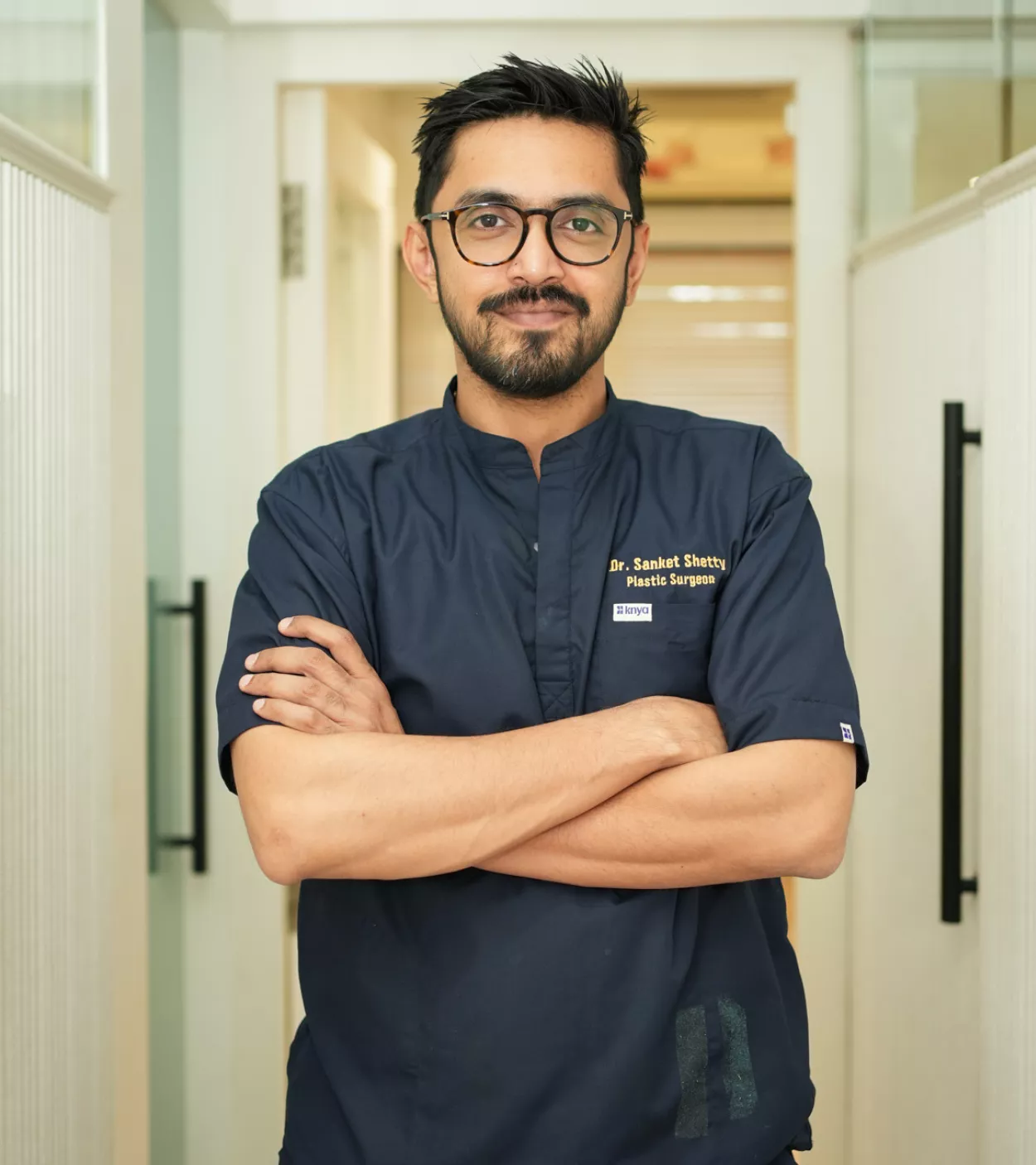
Dr. Sanket Shetty
M.Ch Plastic Surgeon with international training at Royal Stoke Hospital, UK, experienced in advanced aesthetic and reconstructive surgeries.
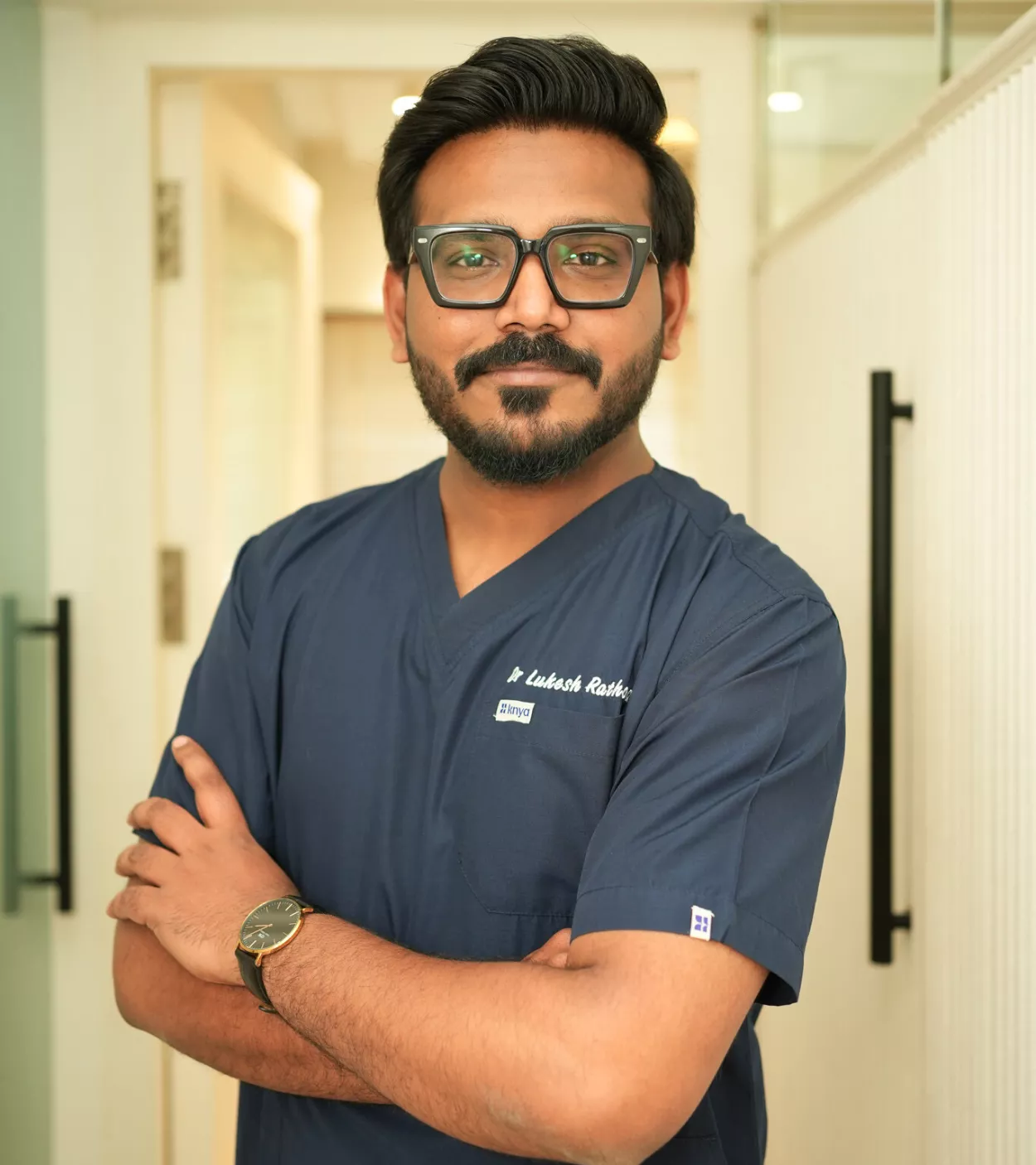
Dr. Lukesh Rathod
With over 10 years of experience, Dr. Rathod specializes in minimally invasive aesthetic procedures and advanced skin treatments
Hair Transplant Techniques at Navaa
FUE Hair Transplant (Follicular Unit Extraction)
FUE is the most commonly performed hair transplant technique at Navaa. Individual hair follicles are carefully removed from the donor area and transplanted into thinning or bald areas. Since follicles are extracted one by one, there is no long linear scar, recovery is quicker, and the results look natural. It is suitable for most patients with mild to moderate hair loss.
DHI Hair Transplant (Direct Hair Implantation)
DHI is an advanced hair transplant technique that places each follicle directly into the scalp using a specialised implantation pen. This allows your surgeon to control the angle, depth, and direction of every graft with greater precision. DHI is often recommended for restoring the hairline or achieving higher density in smaller treatment areas.
FUT Hair Transplant (Follicular Unit Transplantation)
FUT involves removing a narrow strip of scalp from the donor area to obtain a larger number of healthy hair follicles in one session. It is often recommended for patients with advanced hair loss who require extensive coverage. Although it leaves a fine linear scar, it is usually hidden beneath the surrounding hair.
Beard & Eyebrow Hair Transplant
Hair transplantation is not limited to the scalp. It can also restore beard density, fill patchy areas, or reshape eyebrows for a fuller, more defined appearance. Using your own hair follicles, the procedure is tailored to match the natural direction, angle, and density of existing hair for results that blend seamlessly.
Restore natural hair growth with advanced hair transplant surgery in Mumbai.
Take the first step towards natural hair growth today — Book your consultation with a trusted hair transplant surgeon in Mumbai.
What is Hair Transplant Surgery?
Hair transplant surgery is a procedure in which hair follicles are removed from an area of the scalp with permanent hair growth – the donor area, typically at the back and sides of the head – and transplanted to areas where hair has been lost or thinned. The transplanted follicles retain the genetic characteristics of the donor area, meaning they continue to grow permanently in their new location.
Hair transplant is the only permanent solution to hair loss from male or female pattern baldness. Unlike topical treatments or medications that slow or temporarily halt hair loss, a hair transplant physically restores hair where it has been lost – with natural-looking results that grow, can be cut, washed, and styled like normal hair.
How Hair Transplant Works - The Science Simply Explained
Hair loss in male and female pattern baldness is caused by the hormone DHT (dihydrotestosterone), which causes hair follicles in genetically susceptible areas – the hairline, crown, and top of the scalp – to miniaturise and eventually stop producing hair. The follicles at the back and sides of the scalp are genetically resistant to DHT – they do not miniaturise regardless of where they are placed.
A hair transplant exploits this principle. By moving DHT-resistant follicles from the donor area to the balding recipient area, the surgeon gives the recipient area permanent hair that is genetically programmed to keep growing. This is why hair transplant results are permanent – the transplanted hair retains the DHT resistance of its original location and continues to grow regardless of the surrounding hair loss pattern.
Is Hair Transplant Permanent - and Why?
Yes, hair transplant results are permanent. The transplanted follicles come from the DHT-resistant donor area and retain that resistance after transplantation. They will continue to grow for the patient’s lifetime, just as the donor hair would have. This is the core science that makes hair transplant the only permanent hair loss solution.
Important distinction: the transplanted hair is permanent, but the patient’s non-transplanted hair continues to age and may thin further over time. This is why the initial hair transplant plan must account not just for the current degree of hair loss, but for the likely future progression – to avoid a transplanted hairline that looks out of place as surrounding natural hair continues to thin. At Navaa, this long-term planning is an integral part of the consultation and design process.
Hair Transplant for Women - What is Different?
Female hair loss presents differently from male pattern baldness and requires a different approach. Women typically experience diffuse thinning across the scalp rather than the defined hairline recession of male pattern baldness. The causes are also different – hormonal changes (postpartum, menopause, PCOS, thyroid imbalance), nutritional deficiencies, traction alopecia from hairstyling, and in some cases female pattern hair loss – each of which requires a different assessment.
For women considering hair transplant, the most important first step is identifying the cause of hair loss. Not all female hair loss responds to transplant – diffuse hair loss where the donor area is also thinning may not yield sufficient donor follicles for a successful outcome. At Navaa, a thorough scalp assessment, trichoscopy, and blood work assessment is part of the consultation for female patients before any hair transplant recommendation is made. For women who are good candidates, FUE or DHI hair transplant can restore hairline density and address areas of significant thinning with excellent natural-looking results.
Who is the Right Candidate for Hair Transplant?
Signs You May Benefit From Hair Transplant
You may be a suitable candidate if:
– You have male or female pattern baldness that has been stable for at least one to two years
– You have a sufficient donor area at the back and sides of the scalp with adequate density for harvesting
– You are above 25 years of age – younger patients should wait until hair loss has stabilised before transplanting, to avoid an unnatural result as hair loss progresses
– Your hair loss has not responded adequately to medical treatment (minoxidil, finasteride) or you prefer a permanent surgical solution
– You are in good general health with no conditions that impair wound healing
– You have realistic expectations – a hair transplant restores density in the transplanted area, but does not stop natural hair loss from continuing in non-transplanted areas
Hair Transplant Side Effects - What to Expect Honestly
This is a well-established, safe procedure, but it does involve expected side effects that every patient should understand before surgery:
– Temporary shedding (shock loss): the transplanted hairs shed within two to four weeks of surgery. This is completely normal and expected – the follicles enter a resting phase before beginning new growth. The hair begins regrowing at three to four months.
– Swelling: mild swelling of the forehead and around the eyes is common in the first three to five days after surgery, particularly after FUE and DHI procedures.
– Redness: the recipient and donor areas are red for one to two weeks after the procedure. This settles progressively.
– Temporary numbness: some numbness or altered sensation in the scalp is normal and resolves over weeks to months.
– Itching: mild scalp itching is common as healing progresses. This is normal and managed with prescribed care.
– Scabbing: small scabs form at each graft site in the days following surgery and fall off naturally within one to two weeks. Do not pick or rub them.
Serious complications – infection, graft failure, or poor growth – are uncommon when the procedure is performed by a qualified surgeon with proper technique and post-operative care. Your surgeon will discuss all risks specific to your case at consultation.
Who Should Not Have a Hair Transplant
– Patients with active, progressive hair loss – transplanting while hair loss is still progressing can lead to an unnatural result as surrounding hair continues to thin
– Patients with insufficient donor area density – if the donor area does not have enough follicles to cover the balding area adequately, a transplant is not appropriate
– Patients with certain medical conditions including uncontrolled diabetes, active scalp infections, clotting disorders, or autoimmune hair loss conditions (alopecia areata)
– Patients with unrealistic expectations – a hair transplant restores what was lost, it does not give you more hair than your donor area can provide
How Hair Transplant Works at Navaa - Step by Step
Consultation and Scalp Assessment
Your consultation begins with a detailed assessment of your hair loss, donor area, scalp condition, and future hair loss pattern. Your surgeon will examine your hair density, discuss your goals, and recommend the most suitable transplant technique. You’ll also receive an estimated graft count, a personalised hairline plan, and a clear cost estimate before treatment is scheduled.
Anaesthesia and Preparation
Hair transplant surgery is performed under local anaesthesia to keep you comfortable throughout the procedure. On the day of surgery, the donor area is prepared, and your hairline and treatment zones are carefully marked. Your surgeon will review the treatment plan with you before the procedure begins.
Hair Follicle Transplantation
Healthy hair follicles are carefully harvested from the donor area and implanted into the planned treatment zones using the chosen technique. Every graft is placed at the correct angle and direction to match your natural hair growth. Depending on the number of grafts, the procedure usually takes between four and eight hours, and most patients return home the same day.
Recovery, Aftercare, and Follow-Up
Mild swelling, redness, and small scabs are normal during the first week and gradually settle. Transplanted hairs usually shed before new growth begins after a few months. Regular follow-up appointments help monitor your progress, with noticeable improvement developing over time and final results typically visible within 12 to 18 months.
Breast Surgery Cost in Mumbai
The cost of hair transplant at Navaa depends on the technique used, the number of grafts required, and the extent of the procedure. A detailed, transparent cost estimate is provided at consultation after the surgeon has assessed your scalp and confirmed the treatment plan. No surgery is booked without a full cost discussion.
Factors That Affect the Cost
– Technique: FUE, DHI, and FUT each have different equipment requirements, operative time, and cost structures. DHI is generally the most expensive per graft due to the precision implantation device and the additional time required.
– Number of grafts: hair transplant cost in Mumbai is calculated on a per-graft basis. More extensive hair loss requiring a higher graft count increases the total cost. A 1,500 graft hairline restoration costs significantly less than a 3,500 graft comprehensive coverage procedure.
– Donor area complexity: patients with finer, lower-density donor hair require more extraction sessions and more operative care per graft.
– PRP combination: adding PRP (Platelet-Rich Plasma) treatment to the hair transplant session improves graft survival and growth but adds to the overall cost. Many patients find this combination worthwhile.
– Anaesthesia and operative duration: longer procedures require additional anaesthesia and monitoring time.
EMI & Payment Options at Navaa
Navaa offers flexible EMI options through leading financial partners, making hair transplant accessible without requiring full upfront payment. The team will discuss available payment plans at consultation. Hair transplant is a permanent, one-time investment in your appearance and confidence – and the cost is transparent with no hidden charges.
At Navaa Plastic and Cosmetic Surgery Clinic, the focus is on designing a natural hairline that complements your facial structure.
Each transplant is performed with precision to ensure realistic and aesthetically pleasing outcomes.
Recovery and Results
– Local anaesthesia only – no general anaesthesia required, patients go home the same day
– Mild swelling and redness for three to five days – most patients return to desk-based work within five to seven days
– Avoid strenuous exercise and sun exposure for two weeks
– Transplanted hairs shed at two to four weeks – this is normal and expected, not a failure of the procedure
– New growth begins at three to four months – fine and thin at first, thickening progressively
– Noticeable improvement at six months, full result at twelve to eighteen months
– Donor area heals with minimal scarring in FUE – tiny circular marks that are invisible at normal hair lengths
– Results are permanent – transplanted hair grows for life as it is DHT-resistant
– PRP treatment combined with hair transplant at Navaa improves graft survival and accelerates the growth timeline
Our Approach to Natural Results
Hair transplant at Navaa begins with a principle that guides every decision: the result should be undetectable. Not because we hide that a transplant was done, but because a well-planned, well-executed hair transplant should look like natural hair – in density, in the irregularity of the hairline, in the direction the hair grows, and in how it will age over the coming years. We plan hairlines conservatively and with long-term aging in mind. We recommend graft counts honestly – no patient is told they need more grafts than their case requires, and no patient is promised a result that their donor area cannot support. For a full view of skin and hair treatments at Navaa, explore our Skin Treatments at Navaa.

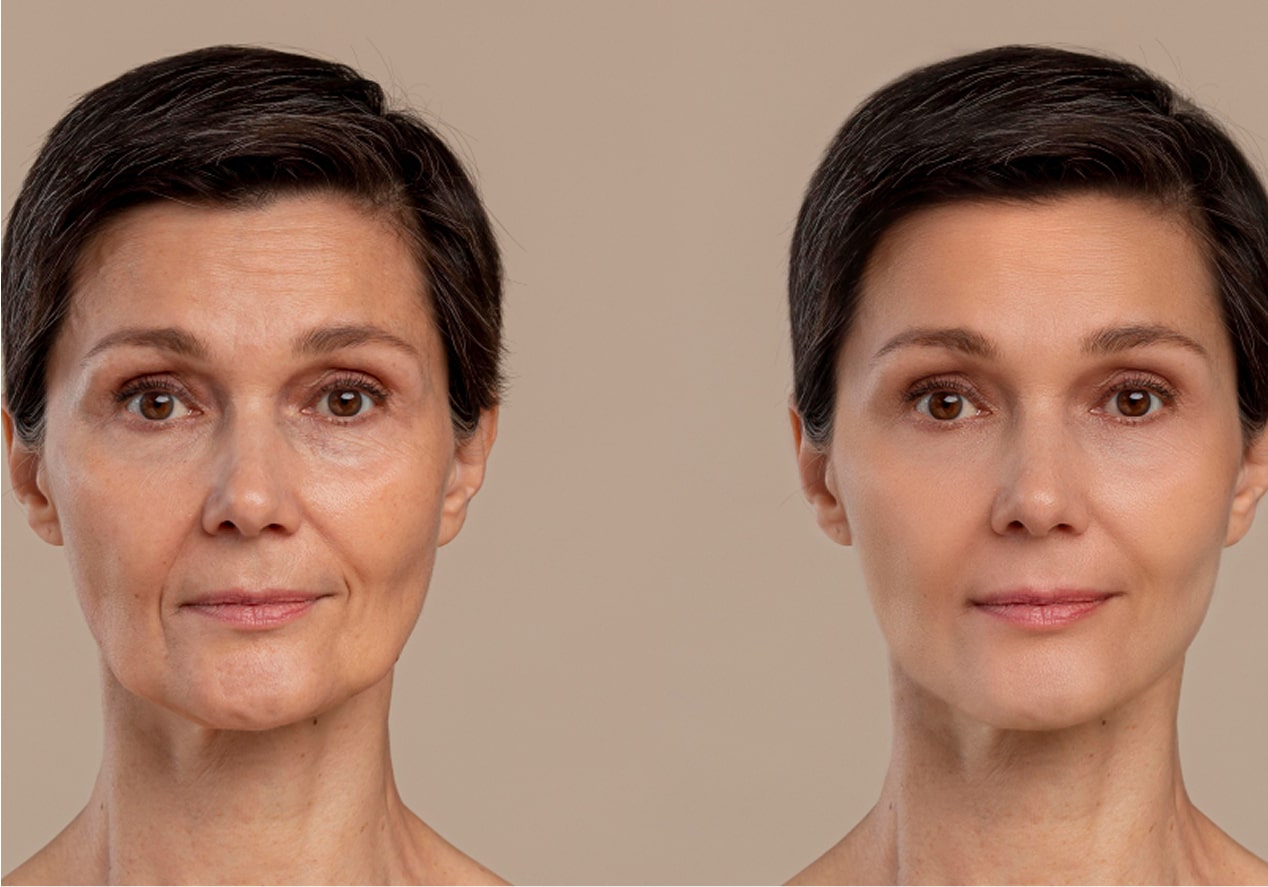
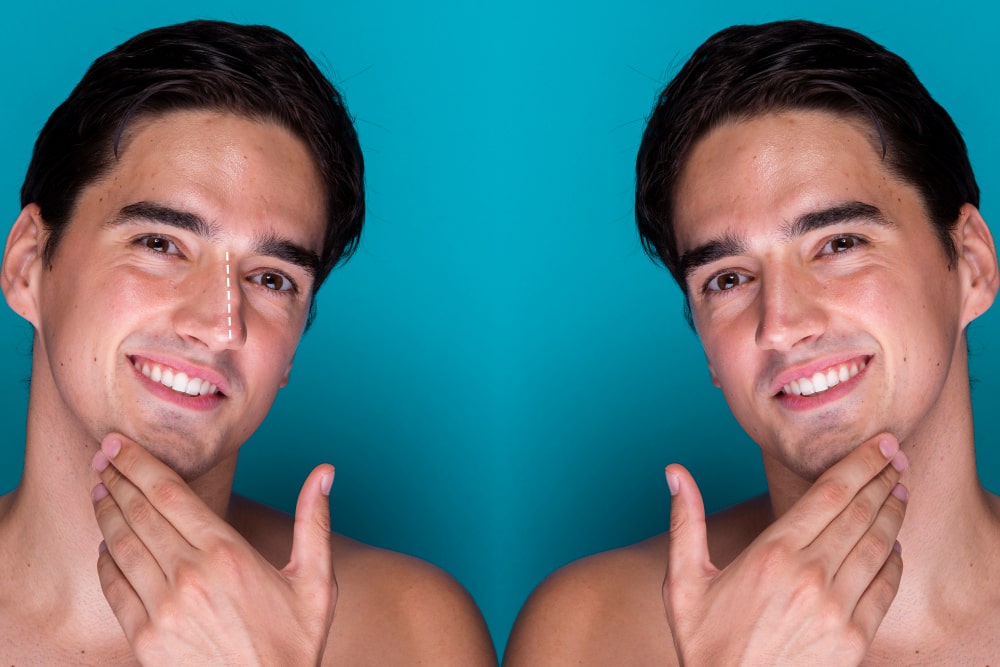
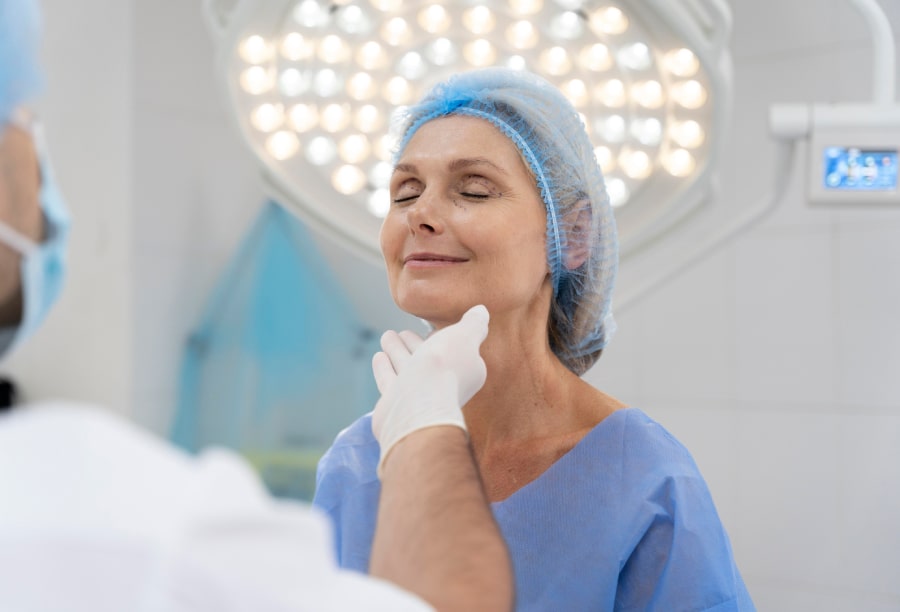
Achieve a fuller hairline and improved density with expert hair transplant at Navaa.
Take the first step towards hair restoration today — Book your consultation with an expert hair transplant specialist in Mumbai.

Visit Best Clinic for hair transplant in Mumbai
Navaa Aesthetics – Plastic Surgery Clinics
4th floor, 405, Morya Estate, New Link Rd, opp. Infinity Mall, Veera Desai Industrial Estate, Andheri West, Mumbai
Frequently Asked Questions About Hair Transplant in Mumbai
How much does hair transplant cost in Mumbai?
Is hair transplant permanent?
Is hair transplant safe?
What are the side effects of hair transplant?
How long does hair transplant take to show results?
Can women have hair transplant?
FUE or DHI - which is better?
How many grafts do I need?
Have More Questions?
Still have questions or need personalised guidance? Our experts are here to help you make informed and confident decisions—every step of the way.
⭐⭐⭐⭐⭐ Rated 4.9/5 by 500+ Patients in Mumbai
Restore your hair and confidence with advanced hair transplant solutions.
Navaa Plastic and Cosmetic Surgery Clinic, Andheri, Mumbai
Book your consultation today