

Does PRP Really Work for Hair Loss? An Honest Look
There are very few hair loss treatments that create both curiosity and confusion, like platelet-rich plasma (PRP). Clinics advertise the procedure extensively; Instagram pictures are full of examples of amazing results, while the question in the minds of people who want to try the treatment is whether the results they see are real or just Photoshop work. So, does PRP work for hair loss? The answer is that in most cases, PRP works amazingly for patients dealing with early and mild hair loss, but PRP hair loss treatment isn’t magic; it doesn’t work for everybody, and the outcomes change dramatically depending on your reasons for hair loss.
What PRP Actually Is
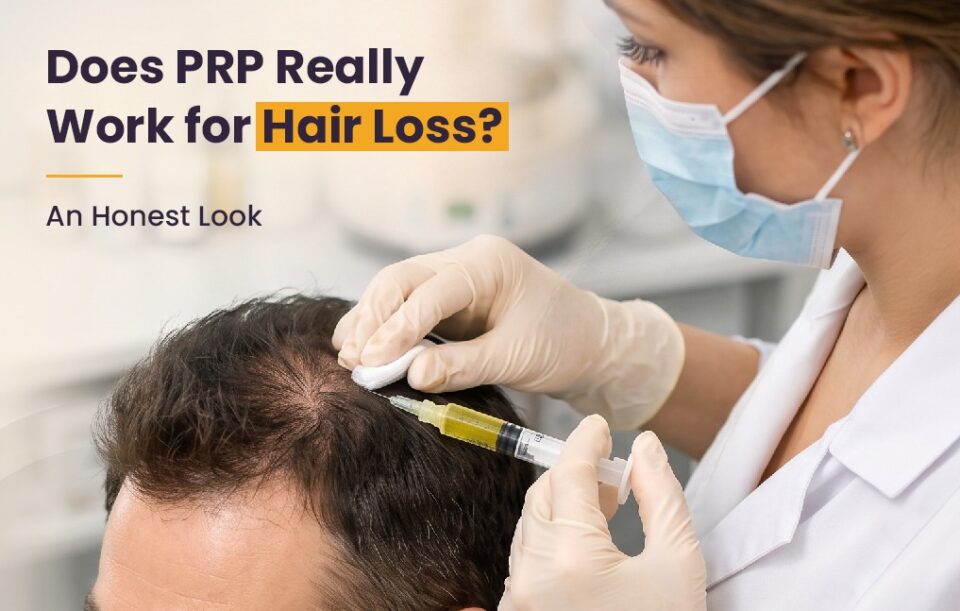
PRP stands for “platelet rich plasma”, meaning that it is a component that comes from the blood of the individual. Platelets play a critical role in the clotting of blood; however, they also contain growth factors, which are proteins that send signals to the cells indicating the need for tissue repair. In this case, PRP treatment for hair loss involves injecting a concentrated form of growth factors on the head.
The PRP procedure for hair is rather simple and painless. Blood is extracted from the individual using an injection process from the arm, just like a standard blood test process. The collected blood is put through the process of separation in a centrifuge machine to extract the platelet-rich plasma. Injections will be delivered with the use of fine needles after numbing the scalp. The whole process will take around an hour, and patients resume their normal activities on the same day.
Can PRP Regrow Hair?
And that’s the key question many people ask about PRP hair loss treatment, and its answer requires certain attention. PRP doesn’t generate new follicles. However, what it could do is activate those follicles that are alive but weakened due to the process of miniaturisation when hair becomes progressively thinner and shorter. Thus, PRP injections for hair regrowth can result in generating thick hair, increasing the growth phase of the hair cycle, and decreasing hair loss.
So, does PRP regrow hair? Yes, partly. Patients generally see improvements in areas of hair where thinning is actively happening, and even thin, inactive hair strands can become visible. The practical benefits of PRP on hair include denser strands, reduction in hair fall, and improved hair coverage on thinning scalp regions. What PRP treatment will not be able to do is bring back hair on areas where the follicle has died out, like a smooth, glossy area of the head that has been having no hair for years, where hair transplantation becomes a better choice than anything else.
Who PRP Suits, and Who It Does Not
But is PRP good for hair in all cases? It’s not. Finally, whether PRP works on hair loss will depend on whether your hair follicles are still active, which in turn depends on the type of hair loss that you have.
PRP may be helpful when you are suffering from:
- Pattern hair loss in its early stages (PRP for androgenetic alopecia is the most researched use)
- Hair thinning with miniaturised follicles, but not completely bald areas
- Hair fall caused by stress or temporary loss of hair
- Recent hair loss, rather than one that has been going on for some time
- Good overall health and proper expectations
PRP will not work well in case of:
- Advanced hair loss with a smooth and shiny scalp
- Scarring alopecia with damage of follicles
- Infection or inflammation of the scalp
- Blood or platelet disorders or if you use blood-thinning medications
- Hair loss due to main conditions like thyroid problems and nutrition deficiencies
Since PRP for hair fall is effective depending on correct identification of the main cause, the correct diagnosis should always come before the injections.
What the Research Actually Says
So, does PRP work for hair loss according to the studies? The result is quite promising but far from clear. Clinical studies and reviews on PRP for androgenetic alopecia indicate improvement in terms of hair density and thickness among those suffering from androgenetic alopecia after the PRP procedure compared to untreated patients or placebo injections. The improvement is usually slow and more realistic when hair follicles are thinning out rather than disappearing.
However, there are some considerations that need to be taken into account. Most of these clinical studies are small-scale, and there is no standard method of preparing PRP for treatment. The difference between blood processing techniques, platelet concentration, number of procedures conducted and other factors prevent any kind of comparison and even calculation of a universal PRP hair treatment success rate.
PRP is also considered to be a supportive therapy and not an alternative therapy to well-researched and proven medication. Then, is PRP effective? In the case of people suffering from thinning hair due to ageing, PRP does seem to help, although the benefits may not be significant. It is also important to note that results may change from one person to another.
What Results Look Like, and When
Hair regrowth is a slow process, and the follicles require some time to react; hence, PRP is a slow process. Normally, the treatment process takes place as follows:
| Timeframe | What You May Notice |
| Months 1 to 2 | Little visible change; some people see slightly less shedding, others a temporary increase first. |
| Months 3 to 4 | Early improvement in hair texture and thickness, with less hair fall |
| Month 6 | Usually the clearest PRP hair results, with better density in treated areas |
| Beyond month 6 | Results plateau and need maintenance sessions to hold |
Protocol and maintenance of the sessions: The normal procedure involves scheduling sessions at monthly intervals of three to four sessions per month, followed by maintenance after six to twelve months. It all depends on your current situation regarding hair loss and your response to the sessions.
If you are asking yourself, “Does PRP work for hair loss quickly?” the true answer will be “no”. It is the continuous sessions during several months that bring results for PRP treatment results, and tracking your PRP hair treatment results by comparing the photos from the beginning and during each review will be much more accurate than using a mirror.
Hair Fall After PRP: Should You Worry?
Patients might have more hair loss in the first few weeks following PRP treatment, and this might be very worrying for them. But hair fall after PRP is usually a temporary side effect. The weaker, smaller hair might fall off because of the resetting of the follicle before new hair growth.
So can PRP cause hair loss? Well, it should not cause permanent hair loss because it uses your own blood components, and hair loss is temporary and will stop within a few weeks. But it is important that you follow the aftercare advice of the clinic so that the scalp remains calm during this period. If there is excessive hair loss or hair loss for more than a couple of months and there is pain, redness, or swelling in the scalp, then it is time to visit your doctor.
Is PRP Permanent?
Does PRP work for hair loss permanently? No. The problem is that PRP therapy does not turn off the cause of most hair loss cases; pattern baldness is caused by both genetics and hormonal effects on your hair follicles. Therefore, even when PRP makes your hair thicker and less likely to thin, the cycle of hair loss continues to happen behind the scenes.
This explains why the answer to ‘Is PRP hair treatment permanent?’ is a strong no. The results are only as long-lasting as the regular maintenance sessions. Think of PRP as continuous hair support, rather than a single therapy. This way, you will be able to prepare for the costs in advance and avoid being disappointed in the future.
Why PRP Works Better Alongside Other Treatments
PRP usually does not give its best effects alone. Since hair loss has many factors behind it, an integrated strategy is likely to be more effective than injecting growth factors alone.
In clinical practice, PRP is used alongside other therapies aimed at solving the issue on multiple fronts, including topical or systemic medication against pattern hair loss, correction of nutritional deficiencies (such as low iron levels or lack of vitamin D), and managing diseases such as thyroid problems. In this case, PRP becomes a helper in stimulating the follicles, while other methods help to slow down or solve the main condition.
PRP also has a function surrounding surgery. In individuals who are suffering from thinning and have lost hair follicles in specific regions, the use of a hair transplant may cover up the thinning in regions where PRP does not work, and the PRP may be given pre- or post-surgery to help the scalp get used to the transplanted follicles. Thus, when patients ask if PRP works for hair loss, the most realistic answer would be that it works best as part of a treatment program created according to your diagnosis. At Navaa Plastic & Cosmetic Surgery, that program begins with finding out what causes the hair loss before recommending PRP treatment or any other option.
Questions Worth Asking Before You Book
Before making any commitments for the course, these questions can help you determine whether the clinic is honest with you about the following issues:
- What is the reason behind my hair loss, and has it been correctly diagnosed?
- Am I a suitable candidate for the treatment given the degree of my hair loss?
- How will the PRP treatment be prepared, and how many treatments will I have to undergo?
- What are the realistic results I should expect, and how will it be determined?
- What is involved in the maintenance phase, and how much will it cost me?
- Is there another method of treatment that would suit me better than PRP?
Watch out for clinics that give assurances or sidestep the following questions.
FAQs
Does PRP work on a bald patch?
Not normally. The PRP treatment requires live follicles to work on. If you have a smooth, old bald spot without any follicles, it won’t be effective, and you may have to consider other treatments like hair transplants.
How many PRP sessions will I need?
Most treatment programs begin with three to four treatments, spaced out by a month. After that, you’ll have maintenance appointments every six to twelve months depending on your hair loss problem and progress.
Is PRP painful?
Most people report experiencing slight to moderate pain. The application of numbing prior to treatment and the related pain tend to resolve themselves within two days.
Are male PRP hair results different from female results?
This is because of the nature of the loss that occurs. Men normally have a thinning hairline and crown thinning, but women tend to experience diffuse thinning. Response varies from person to person, and therefore an evaluation is much more important than just considering the gender factor.
Can I combine PRP with a hair transplant?
Yes, but only in combination with the hair transplant. PRP is used to nourish both the scalp and hair transplant, but this procedure must be scheduled by your surgeon.


