
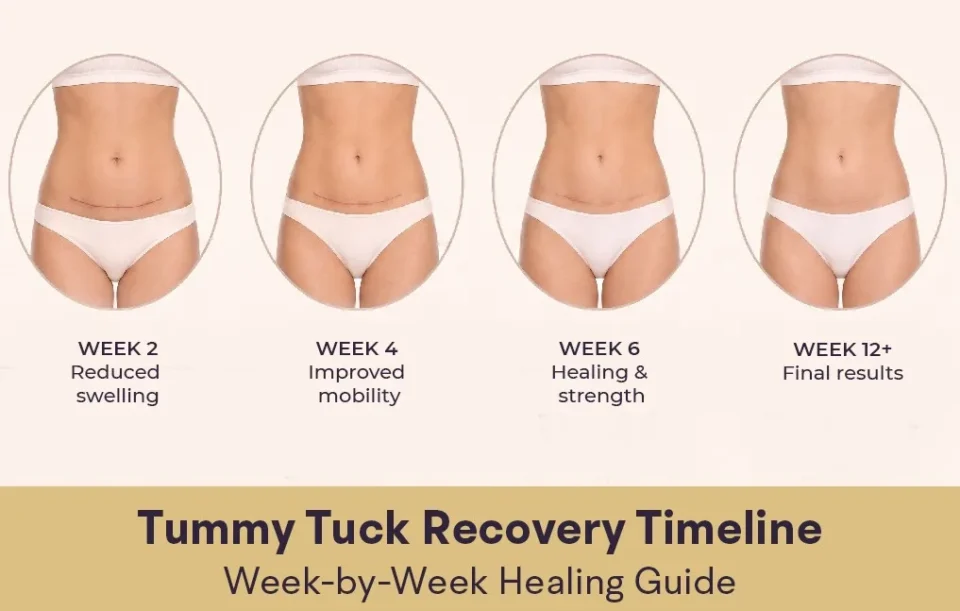

Tummy Tuck Recovery Time: A Week-by-Week Healing Guide
A tummy tuck can give a flatter, firmer stomach but it is a real operation, and the result depends heavily on how well you heal. The recovery is not difficult if you know what is coming. Most of the worry people feel comes from not knowing whether what they are experiencing is normal.
This guide walks through tummy tuck recovery time week by week, so you know what each stage feels like, what you can and cannot do, and when things should start to feel easier. Every person heals at their own pace, and your surgeon’s instructions always come first, but this gives you a realistic map.
How long does tummy tuck recovery take?
Most people return to desk-based work in two to three weeks, feel close to normal by six weeks, and see swelling fully settle over several months. A tummy tuck, or abdominoplasty, repairs the abdominal muscles as well as removing loose skin, and it is that muscle repair that makes the recovery longer than many people expect. You are healing on the inside, not just the surface.
The timeline below assumes a full tummy tuck. A mini procedure heals faster, and recovery also varies with the different types of tummy tuck, your general health, and whether liposuction was done at the same time. Use it as a guide, not a rulebook.
The tummy tuck healing stages, week by week
Stage | What to expect |
Week 1 | Rest. Drains and compression garment in place. Movement limited and bent forward. |
Week 2 | Drains usually removed. Moving more easily. Some return to light desk work. |
Weeks 3–4 | Swelling and bruising fading. Standing straighter. Light daily activity resumes. |
Weeks 6–8 | Most restrictions lifted. Gradual return to exercise with surgeon approval. |
Months 3–6 | Swelling mostly gone. Scar begins to fade. Result becoming clear. |
Up to 12 months | Scar continues to soften and lighten. Final shape settles. |
Week 1: rest and protect
This is the most restricted week. You will feel tight across the abdomen and will not be able to stand fully upright that is intentional, to protect the muscle repair, and you should stay slightly bent when walking. Short, gentle walks around the house are encouraged from very early on, because they reduce the risk of clots. You will likely have one or two drains to collect fluid, and a compression garment to control swelling and support the tissue. Pain is managed with prescribed medication. Plan to have someone help you at home this week.
Week 2: drains out, moving more
For most people the drains come out during this week, which is a noticeable relief. Movement becomes easier, though you will still avoid bending, stretching and lifting. Many people with light, seated jobs return to work now, or work partly from home. Bruising starts to fade. You continue wearing the compression garment through the day.
Weeks 3 to 4: standing straighter
By now you can usually stand upright comfortably, and daily activities feel much more manageable. Swelling is still present, often lower down and worse by the end of the day — this is normal and continues for a while. You still avoid the gym, heavy lifting, and anything that strains the core. Most people are back to normal desk work fully by the end of week three.
Weeks 6 to 8: returning to activity
Around the six-week mark, most surgeons clear patients to begin gentle exercise again, building up slowly. This is a milestone, not a finish line the muscle repair is strong enough for careful activity, but not for maximum effort. Core exercises and heavy lifting are reintroduced last, and only with approval.
Months 3 to 12: the final result
The stomach looks flatter and firmer by three months, and most of the swelling has gone. The scar, which sits low across the abdomen, is at its most noticeable early on and then fades gradually over the following months. Full settling of both the shape and the scar can take up to a year.
Managing swelling
Tummy tuck swelling is the part people underestimate most. It is completely normal, it can last for months, and it often gets worse as the day goes on or after you have been on your feet. Some people notice a temporary lower-belly swelling that comes and goes for several weeks.
What helps:
- Wear your compression garment exactly as instructed this is the single most useful thing you can do
- Rest and elevate when the swelling is worse
- Stay hydrated and keep salt moderate
- Do not judge your final result until the swelling has settled it will look better than it does at week three
Is a tummy tuck painful?
The honest answer: the first week is uncomfortable rather than sharply painful for most people. The strongest sensation is tightness across the abdomen, because the muscles have been repaired and the skin tightened. It feels like a very intense workout of the core, held constantly.
Pain is well controlled with prescribed medication, and it eases noticeably after the first few days. By week two, most people have moved to simple pain relief. If pain suddenly increases rather than decreases, or is one-sided, contact your surgeon that is not the normal pattern.
Returning to work and exercise
Back to work
When you can return to work after a tummy tuck depends entirely on your job. Desk-based work is usually possible in two to three weeks, sometimes sooner on a part-time basis. Work that involves standing all day, lifting, or physical effort needs longer often four to six weeks. Be honest with your surgeon about what your job actually demands, and plan your leave around the realistic figure, not the best case.
Exercise after a tummy tuck
Gentle walking starts immediately and increases week by week it aids healing and is encouraged. Everything beyond that waits. Light cardio typically resumes around six weeks with approval. Core work, abdominal exercises and heavy lifting come last, usually after eight weeks or more, because these directly stress the muscle repair. Rushing back to the gym is one of the most common ways people compromise their result.
Tips for a smoother recover
- Arrange help at home for the first week before your surgery date
- Set up a recovery space with everything within easy reach, so you avoid stretching and bending
- Wear the compression garment as directed, every day
- Walk little and often from day one, but do not overdo it
- Eat well and stay hydrated to support healing
- Do not smoke it significantly slows wound healing
- Go to every follow-up appointment, even when you feel fine
- Be patient with the scar and the swelling both improve for up to a year
Frequently asked questions
How long is tummy tuck recovery time overall?
Most people return to desk work in two to three weeks and feel close to normal by six weeks, but full recovery, including the settling of swelling and scar, takes several months to a year. A mini tummy tuck heals faster than a full one.
When can I sleep on my side after a tummy tuck?
For the first weeks you will sleep on your back with your upper body slightly raised and knees bent, to keep tension off the repair. Most surgeons allow side sleeping once the area has healed sufficiently, often after a few weeks. Follow your surgeon’s specific guidance.
Does the cost of a tummy tuck include recovery care?
This varies by clinic. Some estimates include follow-up visits, the compression garment and post-operative medicines, while others bill them separately. Always ask for an itemised quote. If you are researching pricing, a dedicated guide on tummy tuck cost in Mumbai will break down what a full estimate should contain.
Will exercise ruin my results if I start too early?
Returning to strenuous exercise or core work too soon can strain the muscle repair and affect your result. This is why the timeline is staged and why surgeon approval matters before you progress. Gentle walking, on the other hand, helps from the start.
When will I see the final result?
The stomach looks flatter within a few months, but swelling continues to settle and the scar keeps fading for up to a year. The result you see at three months will keep improving.
Planning your tummy tuck
A smooth recovery starts before surgery with realistic expectations, time booked off work, and help arranged at home. The more you plan, the easier the healing feels.
If you are considering a tummy tuck in Mumbai, a proper consultation will explain the recovery for your specific case, including whether a full or mini procedure suits you. At Navaa Plastic & Cosmetic Surgery, you can book a consultation to discuss the procedure and what your recovery would involve.


