
Septoplasty vs Rhinoplasty: Which Surgery Is Right for You?
Two people can walk into a clinic with the same complaint, “I have a problem with my nose”, and leave with completely different treatment plans. One is booked for septoplasty. The other for rhinoplasty. The names sound similar, and both involve the nose, which is why the two are constantly confused.
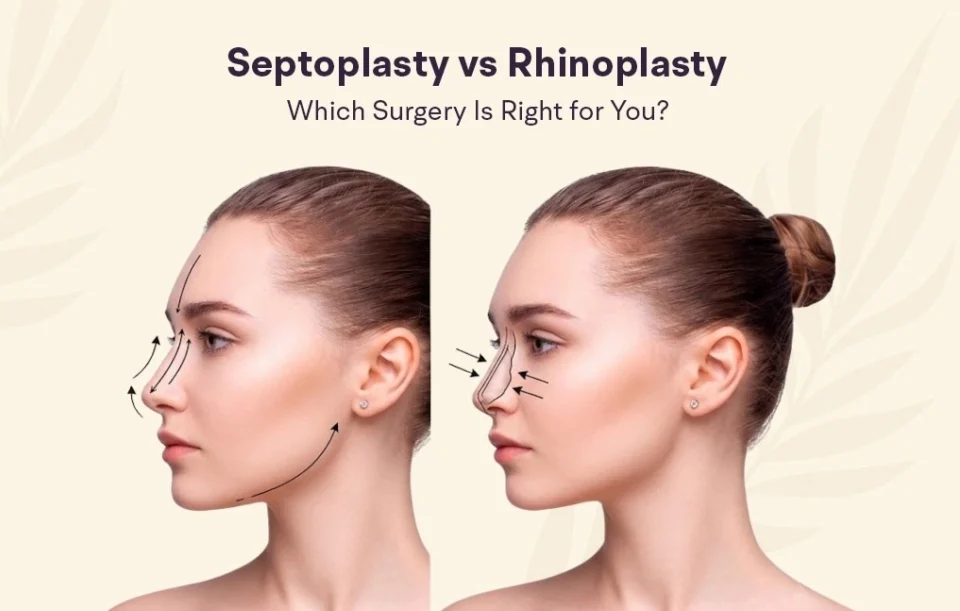
The difference between septoplasty vs rhinoplasty is simple once you know it. One surgery is about how your nose works. The other is about how it looks. Understanding which category your problem falls into will save you time, money and a lot of confusion at your first consultation.
What is a deviated septum?
The nasal septum is the wall of bone and cartilage that divides the inside of your nose into two passages. In most people, it sits slightly off-centre, and that causes no trouble at all.
A deviated septum is when that wall is bent far enough to block airflow on one or both sides. It can be present from birth, or it can follow an injury to the nose, sometimes an injury from years earlier that you barely remember.
Common signs include:
- Blockage in one nostril that never fully clears
- Difficulty breathing through the nose, especially at night
- Snoring or disturbed sleep
- Repeated sinus infections, where a blocked side may be contributing
- Frequent nosebleeds from the dry side
- Constantly breathing through the mouth
A mild deviation may need no surgery at all. Deviated nasal septum treatment often begins with sprays or medication to reduce swelling, and surgery is considered only when symptoms persist despite that.
What is septoplasty?
Septoplasty is a functional operation. Its purpose is to straighten the septum so that air moves through both nostrils properly. It is the standard deviated septum surgery.
During the septoplasty procedure, the surgeon works entirely through the inside of the nose. The lining is lifted away from the septum, the bent portion of bone and cartilage is straightened, reshaped or partly removed, and the lining is laid back down. There are no external cuts, and in most cases the outward appearance of the nose does not change.
Because the goal is breathing rather than appearance, septoplasty is classed as medically necessary when a surgeon documents that the deviation is causing symptoms. It is usually done as a day-care procedure.
Some surgeons use an endoscope for better visibility inside the nose, which allows more precise work on deviations set far back in the nasal passage. Whether that approach is suitable depends on where your deviation sits and how your surgeon prefers to work.
What is rhinoplasty?
Rhinoplasty is nose surgery that changes the external shape, size or proportion of the nose. It works on the parts you can see — the bridge, the tip, the nostrils, the width of the base. This is what most people mean when they say “nose job”, and it is why cosmetic rhinoplasty and septoplasty are not interchangeable terms. If you are exploring rhinoplasty in Mumbai, the starting point is always what you want to change about the appearance of your nose.
Rhinoplasty may be chosen to reduce a hump on the bridge, refine a wide or rounded tip, straighten a nose that leans to one side, or bring the nose into better balance with the rest of the face. Because it alters the visible framework, it is technically demanding and takes longer than septoplasty.
An important point that surprises many patients: rhinoplasty on its own does not fix a deviated septum. Straightening the outside of a nose does not straighten the wall inside it.
Septoplasty vs rhinoplasty: the key differences
Septoplasty | Rhinoplasty | |
Purpose | Improves breathing | Changes appearance |
Works on | The internal septum | The external structure |
Incisions | Inside the nose only | Inside, or a small external incision |
Visible change | Usually none | Yes, that is the point |
Classification | Functional, medically indicated | Usually cosmetic |
Typical recovery | Shorter | Longer, with swelling over months |
Insurance | Often eligible | Cosmetic cases typically excluded |
What if you need both? Septorhinoplasty
Many people fall into both categories at once. A nose that was broken in childhood may look crooked from the outside and be blocked on the inside. In that situation the two operations can be combined.
Septorhinoplasty is a single surgery that straightens the septum and reshapes the external nose at the same time. The advantages are practical: one admission, one anaesthesia and one recovery period instead of two. It also lets the surgeon correct both together, which matters because the internal and external structures affect each other.
The trade-off is that the operation is longer and more complex than either procedure alone, and it requires a surgeon comfortable with both the functional and the aesthetic side of nasal surgery.
Septoplasty or rhinoplasty: how to know which you need
Ask yourself what actually bothers you day to day.
Signs that point towards septoplasty
- Your main complaint is breathing, not appearance
- One nostril feels blocked most of the time
- You snore, sleep poorly, or wake with a dry mouth
- You get sinus infections repeatedly
- You are happy with how your nose looks
Signs that point towards rhinoplasty
- Your main complaint is the shape, size or symmetry of your nose
- Breathing is comfortable through both sides
- You feel your nose does not sit well with the rest of your face
Signs that point towards both
- Your nose looks crooked and feels blocked
- You had a nasal injury that changed both the shape and the airflow
This is a guide, not a diagnosis. Only an examination can confirm what is happening inside your nose, because the outside appearance often gives no clue about the septum behind it. A nose that looks perfectly straight from the front can hide a significant deviation, and a nose that looks crooked may have clear airways on both sides.
Recovery: what to expect
Septoplasty recovery
Septoplasty recovery is generally the easier of the two. There is no external bruising in most cases, since nothing is done to the outside of the nose. Expect congestion and a blocked feeling for the first one to two weeks as the lining settles, and most people with desk-based work return within about a week. Nasal breathing improves gradually rather than immediately.
Rhinoplasty recovery
Rhinoplasty recovery takes longer. A splint is worn for the first week, bruising around the eyes is common, and although most people return to work at around two weeks, swelling continues to settle for months. The final shape of the nose can take up to a year to appear fully.
For septorhinoplasty, plan for a rhinoplasty timeline rather than a septoplasty one.
Does insurance cover septoplasty or rhinoplasty?
This is where the distinction matters financially. Septoplasty performed for a documented breathing problem is often eligible for insurance consideration in India. Purely cosmetic rhinoplasty is generally excluded from health policies.
When both are done together, an insurer may consider the functional portion while the cosmetic portion remains self-paid. The split depends on your policy wording and on proper medical documentation. Ask your clinic for an itemised estimate and apply for pre-authorisation before your surgery date, not after.
Frequently asked questions
Can septoplasty change how my nose looks?
In most cases the external appearance stays the same, because the surgery is done inside the nose. Occasionally, correcting a severe deviation produces a subtle change. Your surgeon should tell you in advance if that is likely in your case.
Will rhinoplasty fix my blocked nose?
Not by itself. Cosmetic rhinoplasty addresses the external shape and does not straighten the septum. If breathing is a problem, the functional correction has to be planned as part of the surgery.
Is septoplasty painful?
The surgery is done under anaesthesia, so you feel nothing during it. Afterwards, most people describe pressure and blockage rather than sharp pain, and it is managed with prescribed medication.
Can I have septoplasty and rhinoplasty at different times?
It is possible, but doing them together is usually preferred. Operating on a nose twice means two recoveries, and scar tissue from the first surgery can make the second one harder.
How long does the surgery take?
Septoplasty on its own is usually the shorter of the two. Rhinoplasty takes longer because more structures are being reshaped, and a combined septorhinoplasty takes longest. Your surgeon will give you a realistic estimate once your case has been assessed.
Who should perform these surgeries?
Look for a surgeon with formal qualification in plastic surgery or ENT, valid registration with the NMC or the relevant State Medical Council, and regular experience with the specific procedure you need. For combined cases, the surgeon should be comfortable with both the functional and the aesthetic side.
Deciding your next step
The honest answer to “septoplasty vs rhinoplasty” is that your symptoms decide, not your preference. If breathing is the problem, septoplasty is the answer. If appearance is the problem, rhinoplasty is. If both trouble you, they can be corrected together.
A proper consultation involves examining the inside of your nose as well as the outside, so that nothing is missed. At Navaa Plastic & Cosmetic Surgery, you can book a consultation to have both assessed and to understand which option suits your case.


